

Who Is Nomura Real Estate? The Japanese Property Developer and Its Projects in Vietnam
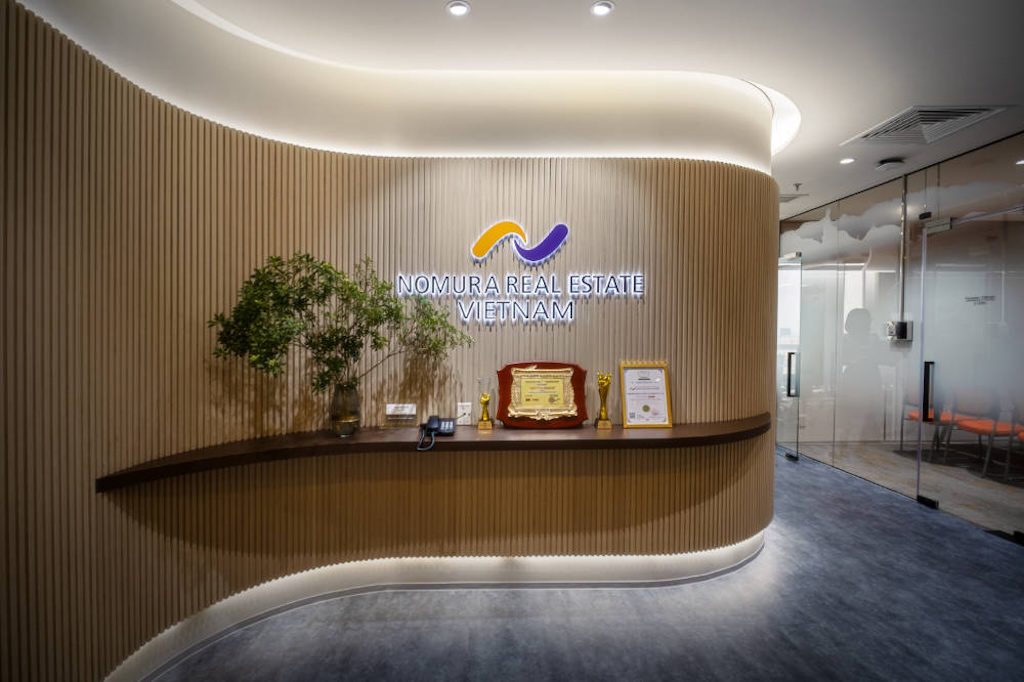
The foreign direct investment (FDI) cash flow into the Vietnamese real estate market is entering a rigorous screening cycle. Current foreign investors not only bring massive financial resources but also impose strict urban development standards. Prominent in this wave is Nomura Real Estate, a powerful real estate institution from Asia.
Clarifying who Nomura Real Estate is, their capital structure, and business philosophy is an important database for investment funds, B2B businesses, and domestic developers to plan competitive or cooperative strategies.
The presence of this Japanese developer in the S-shaped land marks a turning point in quality for the luxury apartment segment and ESG (Environmental – Social – Governance) standard commercial spaces. Unlike financial investment funds that buy and sell fleetingly, Nomura intervenes deeply in planning, architectural design, and operational management.
Through a series of projects in Vietnam, this corporation is establishing a new price level (price setter) and reshaping the construction materials supply chain and high-end real estate management services.
This in-depth analysis report provides an objective lens, dissecting the origins and core financial capacity of Nomura Real Estate, analyzing in detail the projects in Vietnam, and pointing out strategic cooperation and commercial space acquisition (M&A) opportunities for institutional investors.
Macro analysis perspective: Entering the 2026-2030 period, the strategy of Nomura Real Estate in Asia Pacific focuses strongly on establishing Joint Ventures with industry-leading businesses possessing clean land funds.
This Japanese developer uses the advantage of low cost of capital from its domestic market to pour into developing urban areas. Any business wanting to participate in the value chain of projects in Vietnam developed by Nomura must upgrade its risk management system and comply with international sustainable development standards.
Financial foundation and global brand positioning
To accurately assess the position of Nomura Real Estate, it is necessary to consider the corporate roots. Established in 1957, this business was initially the real estate development division spun off from Nomura Securities (Nomura Securities and Financial Group) – one of the largest and most influential financial empires in Japan. The “bloodline” foundation from the financial industry brings them an extremely strict risk management framework and almost limitless capital raising ability.
In Japan, Nomura Real Estate is a dominant force with the luxury apartment brand “PROUD”. Their asset portfolio covers all profitable segments: from Grade A office buildings (PMO brand), retail commercial centers, smart logistics hubs (Landport brand), to operating Real Estate Investment Trusts (REITs) listed on the Tokyo stock market.
Their strategic shift overseas was driven by the saturation of the domestic market and the monetary easing policy of the Bank of Japan (BOJ).
When entering Vietnam, this Japanese developer positions itself as an Urban Creator, not merely a capital provider. Political stability, a rapid urbanization rate, and the rise of the middle class are macroeconomic factors reinforcing their decision to pour billions of USD. Domestic businesses can refer to the FDI capital flow analysis reports from N.N GROUP to understand how organizations like Nomura screen and value the market before investing money.
Philosophy of creating sustainable urban spaces
The competitive strength of Nomura Real Estate lies not only in capital scale but also in a real estate development philosophy deeply imbued with Japanese corporate culture identity. When implementing projects in Vietnam, they impose the strictest technical and service standards, thereby creating a quality barrier that few domestic competitors can easily overcome.
The four core pillars in the development capacity of this Japanese developer include:
- Omotenashi culture in architecture: Omotenashi (wholehearted hospitality) is realized through Human-centric design. The projects in Vietnam are optimized for microclimate, ensuring 100% of functional spaces have access to natural light and fresh air, while establishing an absolute private multi-layer security system.
- Green Real Estate Commitment (ESG): Nomura Real Estate complies with a carbon neutrality roadmap. All constructions use environmentally friendly materials, apply advanced wastewater treatment and energy-saving systems, aiming for green certificates like LEED or LOTUS, helping to reduce operating costs for corporate clients.
- Construction risk management: With the “Kaizen” (continuous improvement) principle, this Japanese developer deploys a cross-monitoring system for construction contractors. Construction tolerance is controlled at the lowest level, ensuring outstanding sound insulation, waterproofing, and surface anti-cracking capabilities.
- Refinement in Localization: Instead of copying exactly the Tokyo model, Nomura Real Estate conducts deep research into the living habits and tropical climate topography of Vietnam to fine-tune the design, bringing maximum convenience to the end-user.
Domestic developers or contractors wanting to participate in the supply chain of Nomura Real Estate must upgrade their bidding profile capacity. The companionship of a project consulting expert from N.N SERVICE in standardizing technical and legal contracts will be the key to passing the strict appraisal process of the Japanese partner.
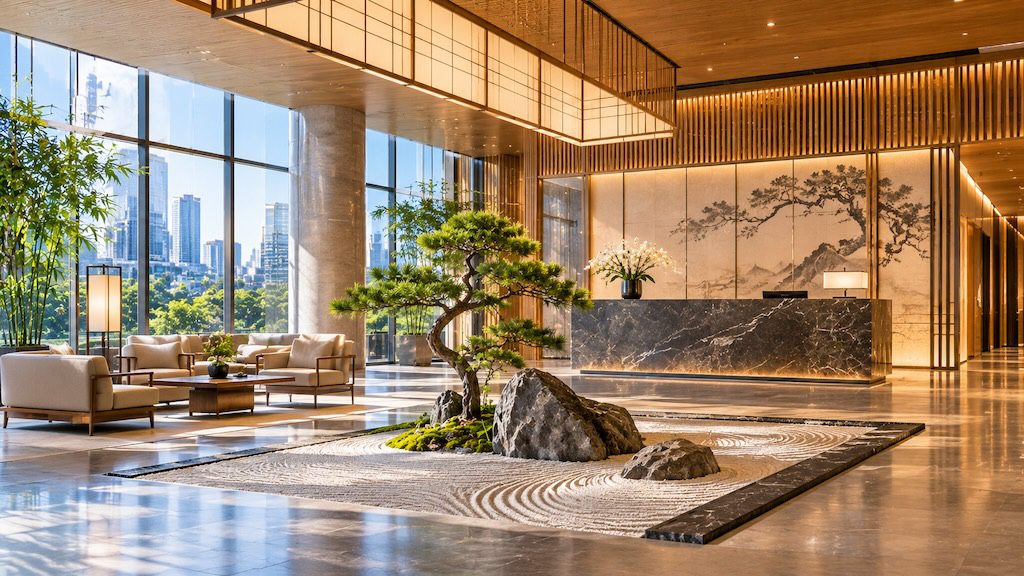
Refinement, minimalism, and a focus on human health are the core values that this Japanese developer brings to projects in Vietnam.
Strategic Alignment with Vietnam’s Urban Master Plans
In evaluating the long-term impact of any foreign entity, one must analyze how their corporate strategy intersects with the host nation’s macroeconomic goals. the corporation has demonstrated a profound understanding of Vietnam’s national urbanization trajectory. The Vietnamese government’s aggressive push towards decentralization, aiming to relieve the congested historic cores by developing satellite cities and polycentric urban models, aligns perfectly with the expertise of this Japanese developer.
By strategically deploying capital into suburban mega-developments rather than solely focusing on the scarce, highly priced land in District 1, they are effectively front-running the market. They anticipate the future flow of the middle class towards areas with superior infrastructure, cleaner environments, and integrated amenities. This forward-looking approach ensures that their projects in Vietnam are not just isolated developments, but vital, connected nodes in the future urban fabric of Ho Chi Minh City and beyond. For institutional investors looking to deploy capital, mimicking this spatial strategy—focusing on emerging transport corridors and transit-oriented development (TOD) zones—is highly advisable.
The Premiumization of the Commercial Real Estate Sector
Beyond residential megaprojects, the influence of this Japanese developer is acutely felt in the commercial sector. The acquisition and meticulous management of assets like the Sun Wah Tower demonstrate a commitment to the ‘premiumization’ of workspaces. In an era where multinational corporations are adopting hybrid work models, the physical office must offer more than just a desk; it must be a destination that fosters collaboration, ensures employee well-being, and reflects corporate ESG commitments.
the corporation achieves this by implementing rigorous Japanese property management standards (PM). These standards dictate everything from the frequency of elevator maintenance and the stringent control of indoor air quality (IAQ) to the professional, omotenashi-driven training of concierge staff. When businesses lease space within these managed assets, they are essentially buying into a highly controlled, prestigious ecosystem. This minimizes operational disruptions and significantly aids in talent retention, proving that the premium paid for such spaces yields a tangible return on investment.
Please refer to the document named “CODE WEB” for more insights on integrating these financial strategies with digital property management platforms.
Joint venture strategy and portfolio of projects in HCMC
Penetrating Vietnam since 2015, the corporation chose a safe and wise approach strategy: M&A (Mergers and Acquisitions) of commercial real estate generating cash flow and Joint Ventures developing housing with domestic corporations owning large-scale clean land funds. Especially in HCMC, the cooperation of this Japanese developer with Phu My Hung and Vinhomes has reshaped the living standards at the South and East poles of the city.
Detailing the projects in Vietnam below gives investors a panoramic view of the massive asset fund that Nomura co-owns:
| Mega-project Name & Subdivision | Joint Venture Partner & Location | Role of the Japanese developer & Market Positioning |
|---|---|---|
| Phu My Hung Midtown Complex (The Grande, The Symphony, The Signature, The Peak) | Phu My Hung & Consortium of 3 Japanese partners (Daiwa House, Nomura, Sumitomo). Location: South Saigon (District 7, HCMC). | the corporation participated in creating a complex inspired by world-famous Midtowns. Providing luxury retail premises serving the international expert community (Expats). |
| Vinhomes Grand Park Mega City (The Origami & The Miyako Subdivisions) | Vingroup (Vinhomes) & Mitsubishi Corporation. Location: Thu Duc City (East Pole of HCMC). | Pouring record capital to develop tens of thousands of apartments. Introducing Japanese Zen garden culture and large-scale Koi ponds into the urban landscape, establishing a smart “Resort” living standard. |
| Sun Wah Tower Grade A Office Building | Acquired shares (Commercial M&A). Location: Nguyen Hue Street, District 1, HCMC. | Holding central core asset (CBD) to create Recurring Income. Upgrading the building operation system to international standards. |
| Zen Plaza Office Building | Acquired shares (Commercial M&A). Location: Nguyen Trai Street, District 1, HCMC. | Managing and exploiting workspace. Optimal opportunity for FDI enterprises needing a headquarters in one of the projects in Vietnam managed by Japan. |
Besides the HCMC market, the corporation also made a strong mark in the North with the Ecopark Swanlake Residences Hot Spring Apartment Complex (Hung Yen – Hanoi). This Japanese developer brought Onsen therapy technology right into the home, pioneering the Wellness Real Estate market in Vietnam.
B2B businesses (F&B, retail, medical services) wishing to establish business premises at these projects can consult the commercial premises project portfolio of N.N REALTY to get valuation reports and internal customer traffic analysis.
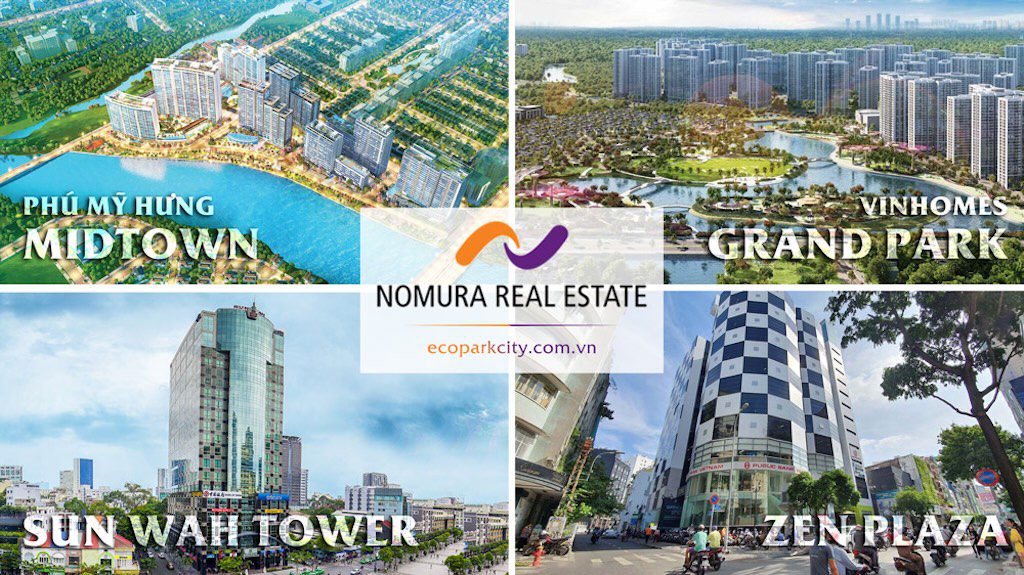
Mega-projects of Nomura Real Estate.
Architectural analysis and Asian feng shui art
One of the factors creating outstanding liquidity for the projects in Vietnam developed by the corporation is the architectural cultural harmony. This Japanese developer skillfully combines the minimalist design language (Minimalism) of the West with the profound feng shui philosophies of the East.
A prominent feature in Nomura’s high-end apartment complexes (like The Peak or The Origami subdivisions) is the appearance of Karesansui art (Japanese dry landscape garden) and Shakkei (the art of borrowed scenery).
Instead of maximizing commercial area, they dedicate a large proportion to water surfaces, natural stones, and a multi-layer green tree ecosystem (like Sakura Park). The harmonious circulation of air and natural light not only saves energy but also ensures the circulation of “Life Force” (Sinh Khi), bringing prosperity to residents and businesses.
For commercial investors, choosing the premise direction and lobby location at building podiums carries great wealth significance. To optimize investment decisions from a Western scientific perspective, businesses should consult the feng shui architectural handbook from N.N REALTY to select the most prime trading locations in Nomura’s projects in Vietnam.
Macro impacts and B2B M&A acquisition trends
From a macroeconomic perspective, the influx of capital from the corporation creates a dual impact on the Vietnamese real estate market. On the one hand, they provide a massive liquidity solution for domestic real estate corporations thirsty for capital to complete mega-cities. On the other hand, this Japanese developer is quietly acquiring the most profitable land banks and office buildings through M&A deals.
For private equity funds, REITs, or large retail businesses, owning assets or signing long-term lease contracts at projects in Vietnam operated by Nomura brings absolute peace of mind regarding Property Management quality and the stability of the Tenant Mix community. Risks regarding legalities, common-private area disputes, or the degradation of MEP (mechanical, electrical, plumbing) infrastructure are almost eliminated.
However, M&A transactions, wholesale premises purchases, or negotiating large space lease contracts with foreign legal entities always contain complex barriers regarding contractor tax, investment laws, and cross-border money transfer rules. Entrusting the Legal Due Diligence process to the commercial lawyer team of N.N SERVICE will help businesses establish safe terms, strictly defending against exchange rate risks and macro fluctuations.
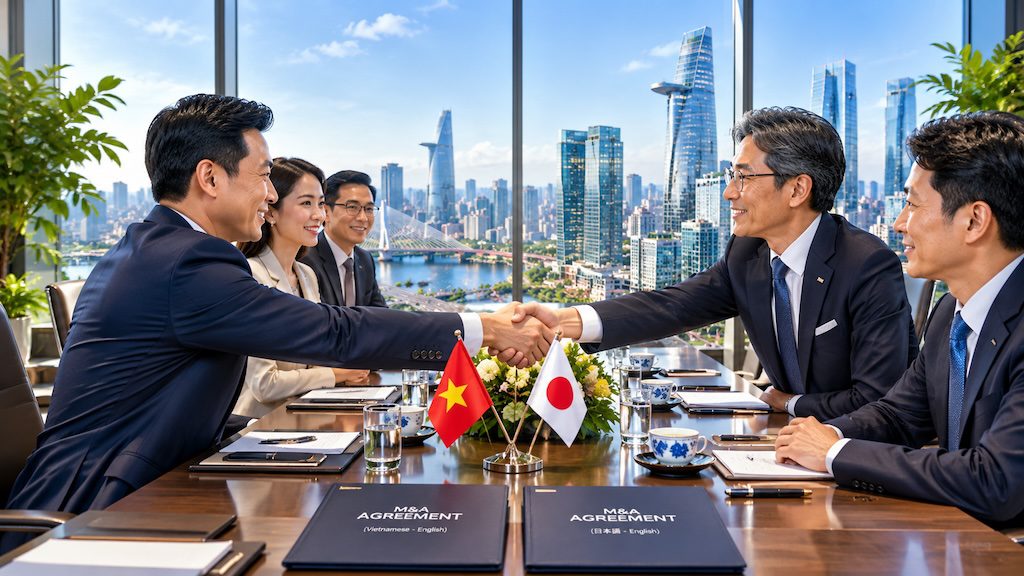
Acquiring or leasing commercial spaces developed by Nomura Real Estate requires rigorous M&A legal appraisal and negotiation skills.
Navigating the Legal Complexities of Joint Ventures
While the Joint Venture (JV) model is the preferred entry vehicle for the corporation, structuring these partnerships in Vietnam is notoriously complex. It is not merely a matter of signing a Memorandum of Understanding; it involves a meticulous alignment of financial, legal, and operational expectations between vastly different corporate cultures. The Japanese approach is highly methodical, process-driven, and risk-averse, whereas domestic developers often operate with more agility and adaptability to local bureaucratic nuances.
The success of these JVs hinges on the exhaustive Legal Due Diligence conducted prior to capital injection. This involves scrutinizing the domestic partner’s land use rights, verifying the completion of financial obligations to the state, and ensuring that master plans (1/500 scale) are definitively approved. For any foreign investor looking to emulate the success of this Japanese developer, establishing an ironclad Shareholder Agreement that clearly delineates decision-making powers, exit strategies, and deadlock resolution mechanisms is paramount. Without this rigorous legal scaffolding, even the most promising projects in Vietnam can become mired in intractable disputes, trapping foreign capital.
Future Outlook: The Rise of Logistics and Data Centers
Looking ahead to the next decade, the portfolio of regional assets managed by Japanese capital will likely diversify significantly. The explosive growth of e-commerce and the restructuring of global supply chains (the “China Plus One” strategy) have created an insatiable demand for international-standard logistics facilities. the corporation, leveraging its highly successful ‘Landport’ brand from Japan, is perfectly positioned to capture this market share.
We anticipate significant investments in multi-story, automated smart warehouses located strategically near major seaports and future ring roads. Furthermore, as the digital economy expands, the demand for Tier III and Tier IV Data Centers will surge. These highly specialized, energy-intensive assets require precisely the kind of meticulous engineering, stable capital, and long-term operational expertise that a premium Japanese developer possesses. For B2B investors, these emerging asset classes represent the next frontier of high-yield, stable commercial real estate investment in Vietnam.
Frequently Asked Questions (FAQ) about Nomura Real Estate
Below are 6 practical issues that B2B investors and Chief Strategy Officers frequently care about when analyzing the capacity of the corporation and their regional assets:
1. How strong is the financial potential of Nomura Real Estate on the international market?
2. Why are Nomura’s projects in Vietnam often Joint Ventures instead of 100% foreign-invested?
3. What is the biggest difference in Nomura’s construction quality compared to the general market?
4. How can a domestic business become a subcontractor for Nomura’s projects?
5. Who is the typical customer segment buying and leasing at Nomura’s projects?
6. In the 2030 vision, which real estate segments will Nomura Real Estate expand into in Vietnam?
Conclusion
The strong presence of the corporation is not merely a story of billion-dollar capital flowing into the market, but a revolutionary professional urban creation process. Through regional assets like Phu My Hung Midtown or Vinhomes Grand Park, this foreign investor has affirmed its position as a “price setter”, elevating living standards and bringing sustainable values to both the residential community and commercial investors.
For corporations, investment funds, or B2B businesses, being present in spaces bearing the mark of the corporation is clear evidence of brand positioning and class. However, the journey of negotiating cooperation, leasing Grade A premises, or international real estate M&A always requires legal expertise and market acumen. To fully grasp these golden opportunities, the N.N GROUP ecosystem provides a comprehensive strategic consulting solution:
- Through the expertise of N.N REALTY, we support businesses in retrieving exclusive data, analyzing architectural feng shui, and representing negotiations to acquire strategic commercial premises at international-standard real estate projects.
- Accompanying N.N SERVICE, the Legal Due Diligence process for international contracts, FDI investment licensing procedures, and M&A tax structuring will be carried out with the highest confidentiality and precision, fully protecting the organization’s cash flow.
Let the N.N GROUP ecosystem become the strategic compass, connecting your business with the most high-class and safe real estate spaces on the market!