
Eco-Industrial Park (Eco-IP) Standards: Transition Roadmap and Competitive Advantages in Attracting Green FDI
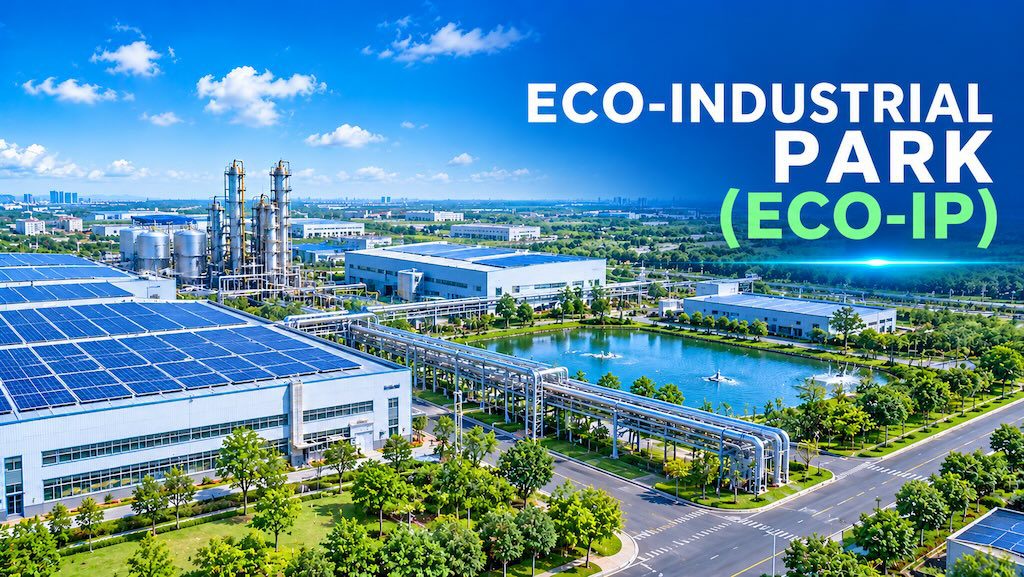
The flow of Foreign Direct Investment (FDI) into Vietnam is witnessing a structural purification. The era of multinational corporations flocking to find cheap land and low-cost labor is over.
When global commitments on Net Zero (Zero Net Emissions) and Europe’s Carbon Border Adjustment Mechanism (CBAM) officially take effect, the criteria for selecting production bases by global investors have completely changed.
In that context, Eco-Industrial Park standards (Eco-IP) emerge not only as an environmentally friendly title but as a mandatory “green passport” to attract green FDI and maintain national competitive advantage.
The reality of the industrial real estate market for green FDI today reflects a fierce polarization.
Traditional industrial parks (IPs), with a linear discharge model and fossil energy-intensive nature, are facing the risk of being “abandoned” by large corporations (Apple, Samsung, Nike) due to not meeting ESG (Environmental – Social – Governance) supply chain requirements.
Conversely, projects achieving Eco-Industrial Park standards are setting an Asking Rent 15-20% higher and maintaining an outstanding Occupancy Rate.
This difference creates survival pressure, forcing Industrial Developers to quickly plan a transition roadmap before being eliminated from the game.
This in-depth analysis will dissect the core criteria frameworks that create an Eco-IP, anatomize the bottlenecks in the transition roadmap of existing IPs, and provide a strategy to help businesses optimize resources to attract green FDI sustainably.
Industrial economic analysis perspective: The biggest mistake of many developers is equating Eco-Industrial Park standards with “planting lots of green trees” and “treating wastewater to standards”.
In fact, the core of an Eco-IP lies in Industrial Symbiosis.
This is a circular ecosystem, where the waste of this factory (excess heat, treated wastewater, scraps) becomes the input material for another factory right within the same subdivision.
Without establishing this symbiotic network, any transition roadmap is merely a “Greenwashing” shell and will be easily exposed by independent appraisal units of the foreign bloc and green FDI.
Dissecting the Eco-Industrial Park standards framework
The legal framework for Eco-IP in Vietnam is clearly shaped through the Government’s Decree 35/2022/ND-CP. This is a pivotal document, transforming abstract concepts into mandatory measurable Key Performance Indicators (KPIs) for any organization wanting to achieve Eco-Industrial Park standards certification.
To be recognized, an IP must simultaneously satisfy 3 extremely strict groups of criteria, creating a huge technical barrier for traditional projects:
- Infrastructure and Compliance Criteria: Ensure 100% of enterprises in the IP do not violate environmental laws. Technical infrastructure (wastewater treatment stations, automatic monitoring systems) must meet the highest standards. The proportion of green tree and water surface area must not be less than 25% of the total IP area.
- Resource Efficiency Criteria: Mandatory application of Cleaner Production solutions. A minimum of 20% of enterprises in the IP must have solutions for efficient energy use, water saving, and waste reuse. Factories must prove a reduction in carbon emissions (CO2) per unit of product compared to before applying the standards.
- Industrial Symbiosis Criteria (Core): Must have at least one industrial symbiotic link model operating in reality. A minimum of 10% of enterprises in the IP commit to participating in this circular network (e.g., sharing hot steam, reusing cooling water, exchanging pallets, packaging).
For infrastructure investment funds, self-assessing internal capacity to meet the Eco-Industrial Park standards set is extremely risky without deep expertise.
The participation of B2B experts from the 1/2000 planning stage is mandatory to ensure land subdivision and industry arrangement align with the symbiotic network.
Developers can refer to the industrial FDI capital flow analysis report from N.N GROUP to update the latest ESG requirements from key markets like the EU, US, and Japan.
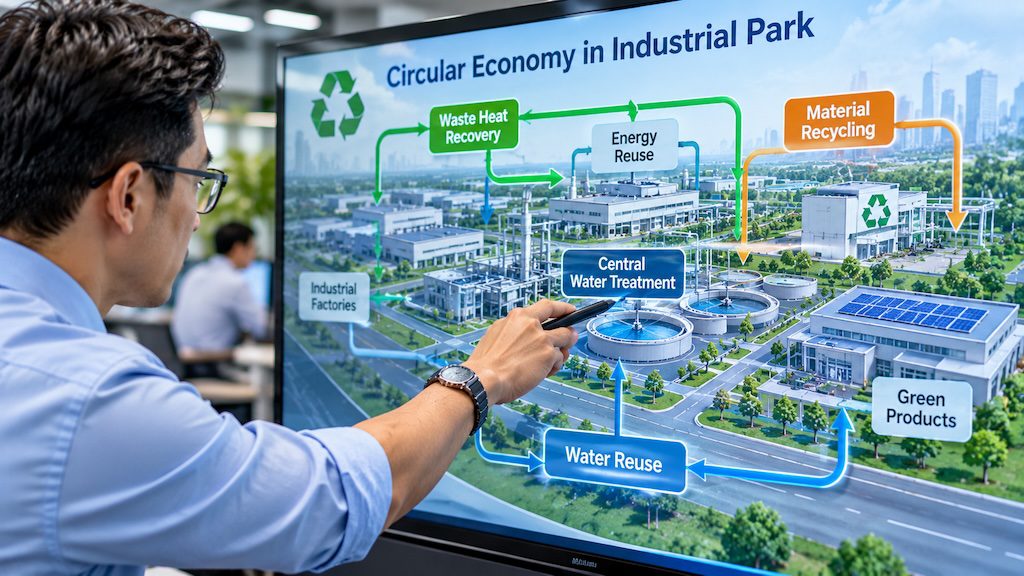
Industrial Symbiosis is the technical core of an Eco-IP, where the waste of this factory (heat, wastewater) becomes the input material for another factory.
Transition roadmap: From traditional planning to Eco-IP
For newly built projects (Greenfield), integrating Eco-Industrial Park standards into the design right from the start has a major advantage in infrastructure structure.
However, the real challenge lies in operating IPs (Brownfield). The transition roadmap of an old entity into an Eco-IP requires a long-term investment strategy and green FDI focus (CAPEX) and the art of Change Management.
This transformation process and transition roadmap is usually executed through 4 strategic phases:
Phase 1: Auditing & Assessment. The IP Management Board conducts an Energy Audit and waste audit on an area-wide scale. Clearly identify resource consumption “hotspots” and draw a Material Flow Analysis map between existing factories.
Phase 2: In-plant Optimization. Before linking, each factory must “clean itself”. The IP supports enterprises to apply Inverter technology, replace old boilers, and install Rooftop Solar systems to immediately reduce electricity costs. This transition roadmap is a stepping stone to build trust to attract green FDI.
Phase 3: Establishing the Symbiosis Network. This is the breakthrough step of the transition roadmap. Based on the material flow map, the Management Board acts as a “Matchmaker”, connecting the discharging factory with the factory needing materials. For example: Connecting a textile dyeing factory (having hot wastewater) with a paper factory (needing thermal steam) via a common pipeline system.
Phase 4: Completing social infrastructure and Certification. Upgrading amenities serving workers (social housing, medical stations, public spaces) according to ESG standards. Completing the dossier to submit to the Ministry of Planning and Investment (MPI) to officially receive the decision recognizing Eco-Industrial Park standards.
| Transition Categories | Execution actions to achieve Eco-IP Standards | Economic Impact & Advantage in attracting green FDI |
|---|---|---|
| Energy Infrastructure Transition | Develop rooftop solar power. Negotiate Direct Power Purchase Agreements (DPPA). Apply Energy Management Systems (EMS). | Reduce Scope 2 Emissions. Directly attract green FDI from technology corporations (Apple, Microsoft) demanding 100% renewable electricity. |
| Water & Waste Management Transition | Invest in RO membrane technology for Water Reclamation. Establish a centralized waste collection and sorting center. | Cut 30-50% of environmental treatment costs (OPEX). Attract supporting industries requiring “Zero Waste to Landfill” certificates. |
| Establishing Industrial Symbiosis | Change subdivision planning (Zoning). Invest in heat/water exchange pipelines between factories. Screen secondary investors by value chain. | Create an “Economic Moat”. Tenants find it hard to leave the IP due to being bound to the symbiotic network. Allows increasing premises rental price by 15-20%. |
Valuing industrial land funds within the transition roadmap requires rigorous analysis of underground infrastructure capacity.
FDI corporations, before signing land lease contracts, often entrust consulting units to review power supply and water treatment capabilities.
Investors can look up ESG-standard industrial real estate project data from N.N REALTY to screen IPs that have been granted true ecological certification, eliminating “Greenwashing” risks. Please refer to the file named “CODE WEB” for integrating digital solutions in these property management efforts.
The Crucial Role of Digital Twins in Transitioning
In the modern era, executing a flawless transition roadmap without leveraging advanced digital tools is virtually impossible.
The concept of a ‘Digital Twin’—a highly detailed, real-time virtual replica of the physical industrial park—is becoming indispensable.
This technology allows park managers to simulate complex industrial symbiotic scenarios before committing capital to physical infrastructure like pipelines or treatment plants.
By running predictive models on energy consumption and waste generation, a Digital Twin can pinpoint exactly where a transition roadmap might fail or face bottlenecks.
Furthermore, this transparency is highly attractive to green FDI investors.
When a multinational corporation can virtually inspect the park’s ESG performance and verify the efficiency of its resource-sharing networks, their confidence in the investment skyrockets, significantly reducing the due diligence timeframe.
Leveraging Government Incentives for Sustainable Transformation
While corporate commitment is vital, the speed of executing a transition roadmap often hinges on government support.
The Vietnamese government is increasingly rolling out targeted financial and regulatory incentives to accelerate the adoption of circular economy models.
These incentives can take the form of accelerated depreciation on green technology investments, streamlined environmental permitting processes for symbiotic networks, and direct subsidies for conducting initial energy audits.
However, navigating the bureaucratic labyrinth to actually claim these incentives is a daunting task.
Developers who master this administrative hurdle not only reduce their own CAPEX but also create a more cost-effective ecosystem, which acts as a powerful magnet for green FDI.
A well-structured transition roadmap must therefore include a dedicated strategy for maximizing these governmental support mechanisms, turning regulatory compliance from a cost center into a competitive advantage.
Decoding the core competitive advantage in attracting green FDI
Why are multinational corporations willing to pay a premium to enter eco-industrial parks? The answer lies in “Compliance Costs” on the international market.
Possessing premises achieving Eco-Industrial Park standards brings financial and commercial advantages that regular IPs cannot provide.
First, overcoming Europe’s CBAM barrier. The carbon border adjustment mechanism requires manufacturers exporting to the EU (like iron and steel, aluminum, fertilizers, cement) to declare and pay carbon emission fees.
When operating in an Eco-IP, factories use renewable energy and symbiotic networks, helping significantly reduce the “Carbon Footprint” per product, thereby avoiding CBAM taxes and maintaining export profit margins.
This is the most powerful weapon to attract green FDI from the EU and US regions.
Second, accessing Green Finance. International banks (like IFC, ADB, Standard Chartered) and private equity funds are applying exclusion policies: Refusing to grant credit to polluting projects.
FDI enterprises and green FDI projects located in IPs achieving Eco-Industrial Park standards will easily access Green Loans or issue Green Bonds with preferential interest rates 1-2% lower than regular commercial interest rates.
Third, value resonance from leading brands. When an IP attracts an “Eagle” (like Lego committing to carbon-neutral production in Binh Duong), it will automatically pull along a series of Tier 1 and Tier 2 suppliers forced to comply with green standards to enter the supply chain.
A successful transition roadmap will create a high-quality FDI ecosystem, immune to short-term economic shocks.
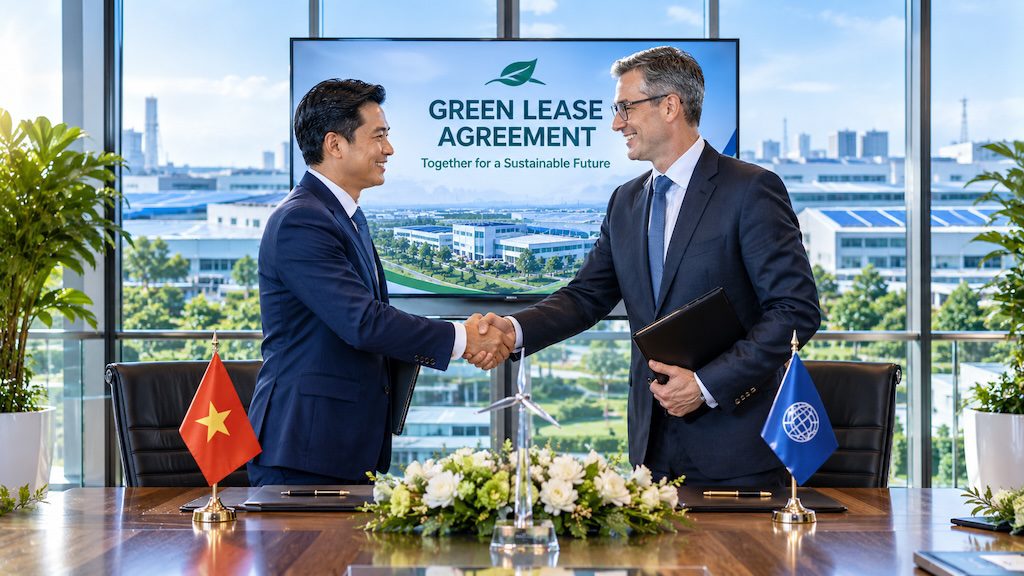
Establishing a Green Lease contract structure helps the IP bind tenants’ ESG responsibilities and remove bottlenecks regarding symbiotic service fees.
Removing legal bottlenecks and benefit-sharing mechanisms
Despite the bright picture, the transition roadmap to achieve Eco-Industrial Park standards is still stumbling upon serious Regulatory Bottlenecks in Vietnam.
Removing these barriers directly determines the speed of attracting green FDI.
The biggest bottleneck lies in the Industrial Symbiosis mechanism.
Current law (especially the Law on Environmental Protection and related Decrees) does not have clear regulations on considering “the waste of this factory as the raw material of another factory”.
Wastewater after treatment from factory A, even if meeting standard A, when transferred to factory B for cooling, is still considered by inspection agencies as an act of “improper discharge”.
Applying for an environmental permit for this circular network is extremely complex and time-consuming.
Second, the DPPA (Direct Power Purchase Agreement) mechanism and rooftop solar power are in the legal perfection stage.
IPs are not allowed to freely sell solar power (excess capacity) to secondary factories within the zone if not going through the EVN grid (Sandbox mechanism). This discourages energy infrastructure investors.
Finally, the lack of a financial benefit-sharing mechanism. The cost (CAPEX) to complete the transition roadmap is huge (investing in centralized treatment systems, IoT management software), but IPs face difficulties in persuading operating enterprises to pay additional infrastructure service fees.
Old land lease contracts (often lasting 50 years) do not have a “Green Premium” clause. Negotiating to sign contract Addendums requires negotiation art and a sharp legal foundation.
To solve this problem, IPs need a defensive legal mechanism right from the contract drafting stage.
The intervention of the infrastructure legal consulting team from N.N SERVICE in establishing a Green Lease Agreement structure will help bind the ESG responsibilities of secondary investors, while simultaneously legalizing the collection of symbiotic service fees properly.
The Art of Feng Shui in green industrial planning
In the mindset of Asian investors (Taiwan, Japan, South Korea) – the key force creating FDI capital flows in Vietnam, the sustainability of Eco-Industrial Park standards is not only measured by environmental indices but also by the balance of Feng Shui. The nature of an Eco-IP is circulation, perfectly matching the Mutual Generation principle of the Five Elements (Metal generates Water, Water generates Wood…).
Planning the water supply and drainage network (Water element) must be arranged with soft curves, avoiding pipelines pointing straight at the main axis of the factory.
Waste treatment subdivisions (carrying foul properties) must be placed in wind-sheltered palaces (declining directions), isolated by dense green tree strips (Wood element) to suppress and purify toxic gas.
The smooth circulation of physical energy flows (water, steam, raw materials) in the industrial symbiosis model is the highest manifestation of circulating “Life Force” (Sinh Khi), helping businesses inside the IP operate stably, avoiding fire and explosion accidents (conflagration).
1/2000 Master Plan contractors should consult industrial architectural feng shui experts from N.N REALTY.
Positioning the main gate of the IP correctly, subdividing plots to catch natural wind, and arranging the landscape according to the golden ratio not only optimizes energy but is also an expensive “psychological touchpoint”, helping to persuade chairpersons of Asian FDI corporations to disburse money quickly.
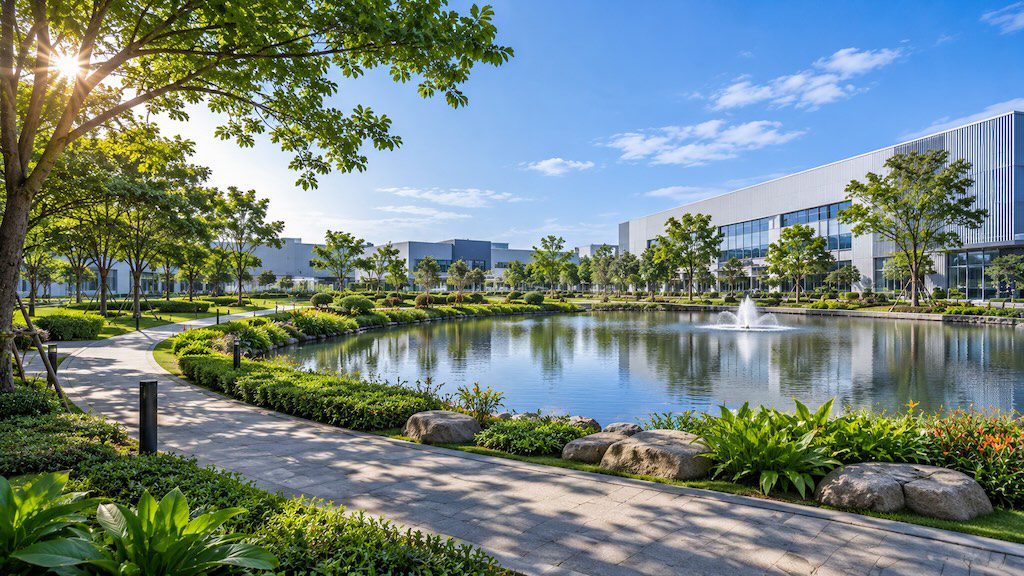
The smooth circulation of the industrial symbiotic system (water, steam, raw materials) is exactly the circulation of “Life Force”, helping the IP attract wealth and green FDI and operate stably.
Frequently Asked Questions (FAQ) about Eco-Industrial Parks
Below are the 6 most highly practical questions that infrastructure developers and FDI funds frequently raise when analyzing these green criteria and mapping out a transition roadmap:
1. What is the estimated time to complete the transition roadmap from a traditional IP to an Eco-IP?
2. Is an IP project required to reach a 100% occupancy rate to be granted an Eco-IP certificate?
3. What is the most direct financial benefit when an IP developer achieves Eco-IP certification?
4. What is the biggest bottleneck when establishing an industrial symbiosis network (heat/water sharing)?
5. Do eco-industrial parks enjoy corporate income tax incentives from the State?
6. How to distinguish a “genuine” eco-industrial park from a project that is just “Greenwashing”?
Conclusion
The shift towards Eco-Industrial Park standards is no longer a “nice-to-have” option, but has become a “must-have” condition for survival on the global industrial map.
Although the transition roadmap requires a large investment resource (CAPEX) and perseverance in symbiotic negotiation, the resulting achievement is a solid “economic moat”, helping infrastructure projects become immune to the volatility of linear supply chains.
For Vietnam, this is a golden opportunity to attract green FDI, improve the quality of capital flows, and affirm its position as Asia’s sustainable manufacturing hub.
However, the journey from planning on paper to being granted an Eco-IP certificate is a maze of technical barriers and legal procedures.
To optimize resources and ensure industrial land fund M&A deals go in the right direction, the N.N GROUP ecosystem brings a specialized investment solution suite:
- Through in-depth planning data from N.N REALTY, we support FDI funds in Target Screening industrial land funds with high symbiotic potential, evaluate underground waste treatment infrastructure designs, and represent Green Lease negotiations at the most optimal prices.
- Accompanying N.N SERVICE, the environmental legal expert team will directly perform Legal Due Diligence, representing businesses to untangle knots in applying for EIA permits, appraising Eco-IP recognition dossiers, ensuring foreign capital flows are safely protected and absolutely comply with ESG standards upon completing the transition roadmap and attracting green FDI.
Don’t let a lag in ESG standards hinder your organization’s capacity to attract international capital flows.
Let the N.N GROUP ecosystem become the strategic compass, guiding your business to successfully plant its flag on the Eco-Industrial Real Estate map today!
Connect with Industrial Real Estate and ESG Investment Consulting