


Ho Chi Minh City’s Cold Chain Market 2026: Rising Supply Demand and Investment Opportunities
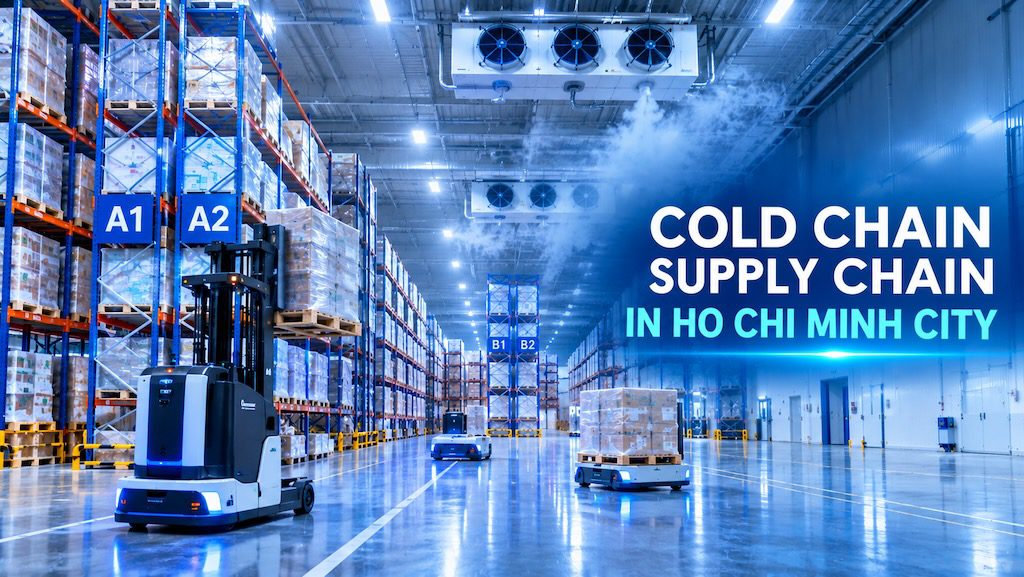
The industrial logistics picture in Vietnam is witnessing a profound polarization.
While the conventional warehouse segment is showing signs of localized oversupply in some suburban provinces, the HCMC cold chain market and supply shortage is falling into a state of severe supply not meeting demand and a massive supply shortage.
Originating from the change in consumer habits post-pandemic, the boom of the e-commerce industry in the fresh food segment, and strict requirements for pharmaceutical storage, the supply shortage of international-standard cold storage is pushing rental prices to record levels.
This is not just a short-term phenomenon, but a structural bottleneck of the urban economy.
For institutional investors and infrastructure development funds, this imbalance is creating extremely attractive investment opportunities and and investment opportunities worth billions of USD.
Cold storage is not simply a factory real estate segment, but a complex asset system intensive in technology and energy. Developing a cold storage project requires capital expenditure (CAPEX) 2 to 3 times higher than traditional dry warehouses.
However, the high barrier to entry is exactly the “economic moat” protecting profit margins for players willing to pioneer. The Capitalization Rate (Cap Rate) of these assets is always outstanding, bringing stable cash flow despite macroeconomic fluctuations.
This in-depth analysis will dissect the drivers pushing the demand of the HCMC cold chain market and supply shortage, anatomize the difficulties in developing new supply, and outline a strategy to help B2B investors position land funds, overcome legal barriers to dominate the investment opportunities in this highly promising segment.
Industrial real estate analysis perspective: The fatal weakness of the current HCMC cold chain market and supply shortage is not only the absolute space shortage, but also Fragmentation.
Most of the existing supply belongs to small and medium domestic enterprises, operating piecemeal with outdated cooling technology, without integrating real-time temperature management software (WMS).
Multinational corporations (F&B, Pharmaceuticals) cannot put goods into these systems because they do not meet HACCP or GMP standards.
The supply shortage is actually a shortage of modern, large-scale storage space (Mega Cold Storage). M&A acquisitions of small scattered facilities to restructure is less feasible than pouring capital to develop new projects (Greenfield) right from the start.
Core drivers fueling the cold storage thirst in HCMC
The supply-demand mismatch in the HCMC cold chain market and supply shortage is not a random consequence, but resonated by three extremely powerful macroeconomic trends.
First, the sublimation of the Omnichannel Retail and Quick-commerce industry.
Millions of consumers in the HCMC megacity have formed the habit of ordering fresh food, milk, and cold cuts via grocery delivery apps.
To ensure a 2-hour delivery commitment, retailers are forced to establish satellite cold storage systems (Micro-fulfillment centers) closely following dense residential areas.
However, commercial land funds in the inner city to develop this model are almost exhausted, pushing demand towards suburban general cold storages.
Second, the outstanding growth of the high-value seafood and agricultural export industry.
Vietnam continuously signs new generation Free Trade Agreements (FTAs), widening the export door.
But the technical barriers of strict markets (EU, US, Japan) require strict traceability and temperature control throughout the storage process.
The freezing and storage capacity at seaports (like Cat Lai, Hiep Phuoc) is currently insufficient, keeping Vietnam’s Post-harvest loss rate still at a high level (about 20-25%).
Third, the boom of the Pharmaceuticals and medical equipment industry.
Post-pandemic, public health awareness skyrocketed. Modern pharmacy chains (like Pharmacity, Long Chau, An Khang) continuously expand their networks, dragging along a massive demand for cold rooms meeting GSP (Good Storage Practice) standards.
The supply shortage of medical cold storage becomes even more severe when the standards for storing vaccines and biological drugs require an extremely stable temperature range, not allowing an error of even 0.1 degree Celsius.
Accurately identifying these drivers helps investors design an optimal Tenant Mix. To update the trend of international capital flows pouring into these segments, businesses can follow macro analysis reports from N.N GROUP, thereby anticipating investment opportunities at the exact moment the market and supply shortage breaks out.
The Impact of Cross-Border E-commerce Integration
In the current era of rapid digitalization, the HCMC cold chain market and supply shortage is experiencing unprecedented integration with cross-border e-commerce platforms.
Global marketplaces are increasingly relying on localized, high-tech cold storage hubs to execute seamless delivery of temperature-sensitive imported goods—ranging from premium cosmetics and dietary supplements to luxury perishables—directly to Vietnamese consumers.
This integration fundamentally shifts the operational paradigm of cold facilities.
They are no longer static holding areas but dynamic, high-throughput fulfillment centers.
For investors, this signifies that the supply shortage is qualitative as much as quantitative; there is a desperate need for facilities equipped with automated sorting systems, high-speed conveyor belts, and real-time inventory tracking APIs that interface directly with international logistics networks.
Furthermore, this cross-border integration dictates highly specialized customs clearance capabilities within the cold storage zone.
Facilities that offer in-house customs inspection points (Bonded Cold Storage) command a significant premium, as they drastically reduce the time goods spend in transit, thereby preserving product integrity.
B2B investors who capitalize on these investment opportunities by building fully integrated, e-commerce-ready cold hubs will secure long-term contracts with the world’s most aggressive retail giants.
Anatomy of costs and market entry barriers
The attractiveness of investment opportunities into the HCMC cold chain market and investment opportunities is undeniable, but why is new supply launching so slowly? The answer lies in the cost structure and fierce technical-legal barriers.
Developing a cold storage system is not as simple as building a giant corrugated iron box. The supply shortage originates from 3 main barriers:
- High Capital Expenditure (CAPEX): Building a cold storage costs from 700 – 1,000 USD/m², 2.5 to 3 times higher than a dry warehouse. This cost comes from the insulation panel system (PU/PIR Panel), industrial refrigeration compressor system (Chiller/Compressor), load-bearing floor structure anti-underground freezing, and specialized fire prevention and fighting (PCCC) system.
- Operational Expenditure (OPEX) and the Energy problem: Electricity accounts for 40% – 50% of cold storage operating costs. Refrigeration compressors must run 24/7. Just a power outage incident lasting a few hours, the damage to goods (spoilage, loss of quality) can reach tens of billions of VND. Therefore, the mandatory requirement is to have a redundant dual power grid and large-capacity automatic generators.
- Management and Operation Level (Know-how): Managing multi-temperature zones in the same facility (e.g., -20°C deep freeze area, +5°C cool area) requires advanced IoT-integrated software systems (WMS). Not many domestic developers possess sufficient management capacity for this.
| Evaluation Criteria | Cold Storage | Traditional Dry Warehouse |
|---|---|---|
| Investment Cost (CAPEX) | 700 – 1,000 USD/m² (Intensive in MEP machinery, insulation panels). | 250 – 350 USD/m² (Mainly pre-engineered steel frames and concrete floors). |
| Lease Term and Loyalty | Long-term contracts (5-10 years). Tenants are hard to leave due to extremely high equipment relocation costs. Very low vacancy rate. | Short to medium-term contracts (1-3 years). Tenants easily move to IPs with cheaper rents. |
| Capitalization Rate (Cap Rate) | High (From 8.5% – 10%). Excellent operating profit margin thanks to rent calculated by volume (pallet/day). | Average (6.5% – 8%). Fierce competition, squeezed rental margins. |
| Legal & PCCC Barriers | Extremely strict. Must have specific PCCC appraisal for refrigerants (Ammonia, Freon) and large generators. | Comply with normal PCCC standards (QCVN 06:2022). Faster licensing time. |
To optimize CAPEX and solve the licensing problem, Foreign Developers often prioritize the strategy of acquiring clean land funds in Industrial Parks with completed infrastructure.
Looking up the industrial real estate project system from N.N REALTY will help investment funds quickly position land plots with large available power supply limits, shortening the time to deploy investment opportunities. Please refer to the file named “CODE WEB” for integrating digital solutions in these property management efforts.
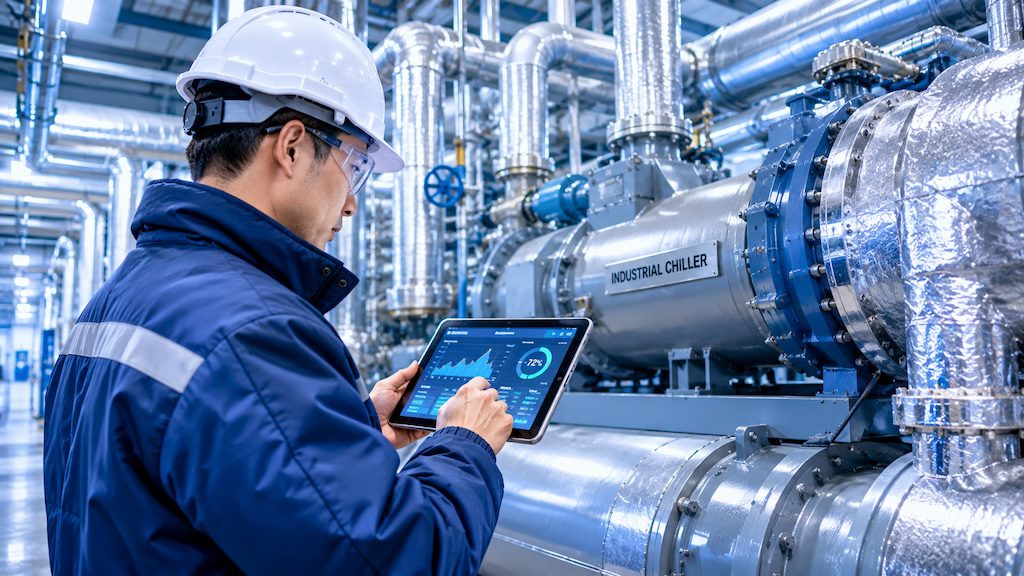
Developing cold storage real estate requires extremely large capital expenditure (CAPEX) on insulation panel systems and industrial refrigeration compressors.
Location Planning: Advantages of South Pole and East Zone of HCMC
In the HCMC cold chain market and investment opportunities business, location not only determines the real estate value but also directly affects the quality of goods. The longer the travel distance (Last-mile delivery), the greater the risk of Temperature Excursion.
The South Zone of HCMC (District 7, Nha Be) is emerging as a golden coordinate to relieve the supply shortage in the supply shortage.
The absolute advantage of this area is its adjacency to the Hiep Phuoc Port and Cat Lai Port systems (via Ring Road 2).
Cold storage projects here (like Lineage Logistics, ABA Cooltrans) act as extremely important transit Hubs for seafood exports from the Southwest region and imported foods.
On the other hand, the East Zone (Thu Duc City, Binh Duong, Dong Nai) is a strategic base serving the domestic consumer market and investment opportunities.
With the Long Thanh – Dau Giay expressway system and Ring Road 3 taking shape, cold storages in this area easily distribute goods to the city center core and connect to the future Long Thanh International Airport.
This infrastructure intersection turns industrial land plots in the East Pole into a gold mine for investment opportunities and investment opportunities developing medical and e-commerce cold storage.
However, land funds large enough (from 2-5 hectares) to develop multi-story cold storage systems at these locations are extremely expensive.
Financial Modeling and Internal Rate of Return (IRR) appraisal must be conducted strictly before deciding to acquire.
Mitigating Climate Change Risks in Cold Chain Logistics
As Vietnam faces the increasing realities of climate change—characterized by more frequent extreme weather events and rising sea levels—the resilience of the HCMC cold chain market and investment opportunities is being put to the test.
A sudden flood or an extended heatwave can compromise even the most robust cooling systems.
Consequently, institutional investors are mandating stringent climate risk assessments before deploying capital.
Addressing the supply shortage now requires building fortresses, not just warehouses.
This means elevating foundation levels significantly above historical flood lines, utilizing advanced, resilient construction materials that can withstand severe storms, and implementing highly sophisticated, localized microgrids to ensure power autonomy during catastrophic grid failures.
While these climate-resilient design choices inflate the initial CAPEX, they are non-negotiable for securing top-tier insurance policies and attracting multinational tenants who cannot tolerate any disruption in their global supply chain amidst this supply shortage.
Ultimately, identifying investment opportunities that successfully integrate these climate mitigation strategies will yield assets that are not only financially lucrative but also physically enduring in a volatile future.
Removing legal bottlenecks and M&A Negotiations
One of the dragging forces delaying foreign investment opportunities is the Legal Due Due process.
Buying an industrial land fund to build a cold storage is much more complex than a normal warehouse.
The biggest bottleneck is the Fire Prevention and Fighting (PCCC) regulations and Environmental Impact Assessment (EIA).
Cold storages use specific refrigerants (like Ammonia – NH3, with a risk of toxic leaks) and backup Diesel generator systems storing tens of thousands of liters of fuel.
The PCCC police agency requires very strict isolation distances and complex emergency smoke extraction systems.
Many M&A projects acquiring old factories (Brownfield) to renovate into cold storage have been suspended because the old factory structure cannot bear the load of ceiling-mounted cooling units, or does not meet standards for preventing fire spread.
Next is the grid connection agreement mechanism.
EVN must approve a separate power supply capacity limit for the project. If the industrial park has run out of power load “room”, the cold storage project will become a dead block of ice.
Foreign investors often fall into a trap at this stage when only looking at the land price while ignoring checking the IP’s transformer station capacity.
To ensure investment opportunities do not turn into bad debts, entrusting the entire legal appraisal process and M&A contract negotiation to the commercial law consulting team from N.N SERVICE is a mandatory step.
Understanding the environmental and PCCC licensing process will help investors shorten preparation time, ensuring the project starts construction exactly on the committed schedule.

The companionship of legal experts helps remove bottlenecks regarding PCCC and environmental licenses, ensuring absolutely safe investment opportunities.
The Art of Feng Shui in industrial cold storage architecture
For Asian investors (Japan, South Korea, Taiwan), the smooth operation of this specific sector is not only a matter of machinery, but also the balance of Feng Shui.
The nature of cold storage bears an extremely strong “Cold” (Yin Water) property, due to the closed, dark space and deep negative temperatures.
If the architecture lacks suppression, an overly prosperous Yin energy will cause psychological effects on operating workers, easily leading to technical errors or labor accidents.
Industrial architecture experts often neutralize this by enhancing the “Yang Fire” or “Yang Metal” element in the executive office area and the Loading Dock area.
Using high-intensity artificial light (Circadian Lighting) simulating sunlight, using bright exterior paint colors (Fire element, Metal element) not only creates attention for brand identity but also helps balance yin and yang for the entire building.
The location of the backup generator and the refrigeration compressor system control room (places generating large heat) must be arranged in mutually generating palaces, avoiding taboo directions to ensure machinery operates durably, without unexpected breakdowns.
To optimize the master plan, developers should consult industrial architectural feng shui experts from N.N REALTY, thereby creating a workspace that both meets international technical standards and attracts business prosperity.
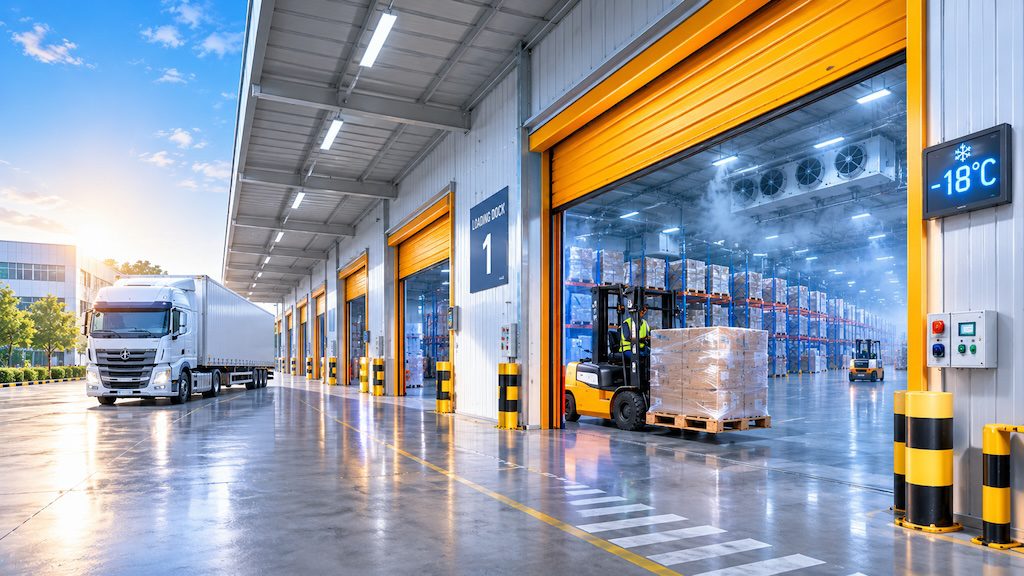
Optimizing the lighting system and using appropriate exterior colors helps balance Fire – Water, bringing stability and prosperity to the cold storage building.
Frequently Asked Questions (FAQ) about the cold storage market
Below are the 6 most highly practical questions that private equity funds, logistics real estate developers frequently raise when analyzing this specific sector and decoding the ongoing supply shortage and supply shortage:
1. What is the estimated time to legally perfect and construct a cold storage project in HCMC?
2. Can I retrofit a normal dry industrial factory into a cold storage?
3. What is the expected Internal Rate of Return (IRR) of an international standard cold storage project?
4. Is Rooftop Solar energy enough to run the cold storage compressor system?
5. How to solve the Vacancy Risk in this supply shortage after building the cold storage?
6. What is the most important point to note in the M&A legal due diligence of land funds for building cold storage?
Conclusion
This specific sector is no longer a niche market and investment opportunities, but has risen to become a critical infrastructure pillar of the urban economy and national export.
The current severe supply shortage is exactly the golden growth room for a new real estate cycle.
Establishing large-scale cold storage systems, applying green technology and automation not only solves the supply chain disruption problem but also brings outstanding return rates (Alpha) for foreign investment capital flows.
However, the complexity of mechanical and electrical technology (MEP), the energy consumption problem, and the matrix of PCCC administrative procedures are barriers that can incinerate any billion-dollar investment opportunities without a methodical execution strategy.
To turn the ambition of dominating the smart logistics market and investment opportunities into reality, financial institutions and industrial developers need a specialized B2B consulting partner. The N.N GROUP ecosystem proudly brings an “All-in-One” investment solution suite:
- Through in-depth planning data from N.N REALTY, we support FDI funds in Target Screening clean industrial land funds, evaluating transformer station capacity, analyzing logistics architectural feng shui, and representing negotiations to acquire the most prime premises in the South Pole and East Zone of HCMC.
- Accompanying N.N SERVICE, the legal expert team will perform sharp Legal Due Diligence, representing businesses to untangle knots in applying for EIA permits, appraising specific PCCC, ensuring the organization’s investment opportunities are always safely protected and the project starts construction exactly on the committed schedule.
Don’t let technical and legal barriers slow down your logistics infrastructure acquisition strategy.
Let the N.N GROUP ecosystem become the strategic compass, guiding your business to create a dominant position in the HCMC Cold Chain market today!
Connect with Industrial Real Estate Investment and Legal Consulting