
Ho Chi Minh City International Financial Center 2027: What New Capital Flows and Investment Opportunities Are Emerging?
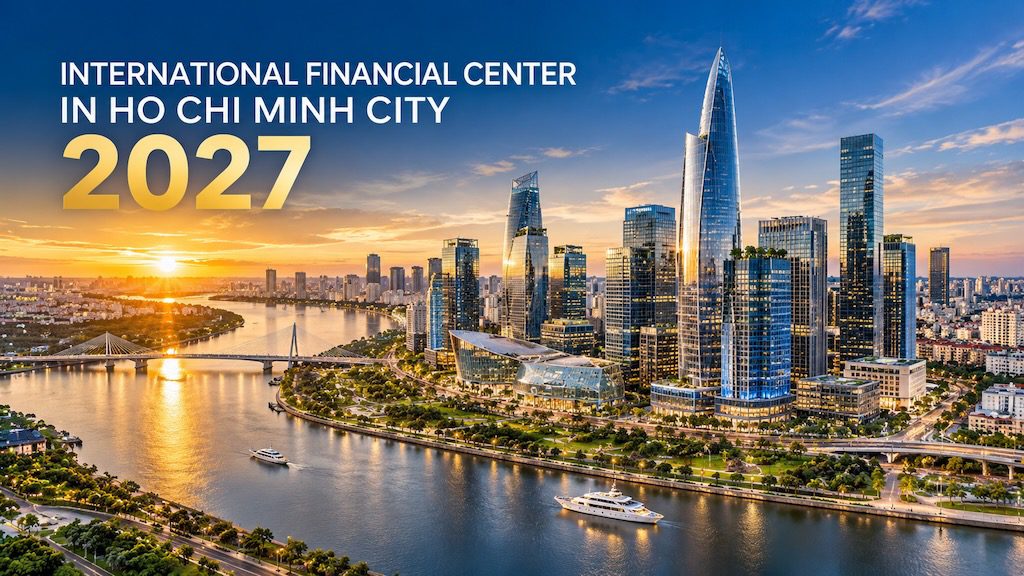
The Southeast Asian financial map is facing a landmark reset. Vietnam’s aspiration to position its national stature in the international arena is being realized through the mega-project of the HCMC international financial center.
Not merely an urban planning concept, this is a specific economic mechanism (sandbox) designed to fully absorb the new capital flow from global financial institutions.
The formation of this center in the 2027-2030 roadmap is expected to break the monopoly of Singapore and Hong Kong in the region, opening up unprecedented M&A and commercial real estate development opportunities.
For institutional investors, Private Equity (PE) funds, and real estate developers, accurately assessing the impact of the HCMC international financial center is a survival problem.
This project is not spread out but focuses on positioning the Thu Thiem area (East Zone) as the core nucleus of financial technology (Fintech) and District 1 as the traditional financial center.
The landing of the new capital flow will activate a massive value-added chain, from the demand for Grade A+ ESG (Environmental – Social – Governance) standard offices, data centers, to utility infrastructure serving the high-level financial expert community (C-level Expats).
This in-depth analysis report will dissect the project’s structure, identify the industries directly benefiting from the new capital flow, and outline a strategy to help B2B businesses acquire the most prime commercial spaces at the HCMC international financial center.
Macro analysis perspective: The core challenge of the HCMC international financial center lies not in building skyscrapers, but in establishing a superior legal corridor.
To welcome a new capital flow worth tens of billions of USD, the city needs a capital account liberalization mechanism, preferential tax rates, and an independent financial court. For real estate investors, “anticipating the planning” in Thu Thiem right now (2026-2027 phase) is the safest asset growth strategy before a new price level is set by international financial institutions.
The core structure of the HCMC international financial center
To answer the question of what opportunities the HCMC international financial center brings, we need to anatomize the operational structure of this model. Not stereotypically simulating traditional financial centers (which are already saturated), HCMC’s project directly targets the fastest-growing niche markets globally: Green Finance and Financial Technology (Fintech).
The core structure of this center is planned based on three main pillars:
- Capital & Derivatives Market: Establishing an internationally interconnected commodity exchange, a carbon credit trading center, and financial derivative instruments. This pillar will attract a new capital flow from Hedge Funds and energy corporations.
- Financial Technology (Fintech Hub): Applying a controlled testing mechanism (Sandbox) for Blockchain technologies, Central Bank Digital Currency (CBDC), and cross-border payments. This is a magnet attracting tech Unicorns and Venture Capital (VC) funds.
- Wealth Management: Providing high-end Private Banking services for Asia’s ultra-rich. Relaxing regulations on foreign investor ownership ratios (foreign room) will turn the HCMC international financial center into an ideal destination to shelter and grow wealth.
With this structure, the physical space to contain financial activities requires extremely strict standards. B2B businesses wanting to provide services to these institutions should regularly consult FDI capital flow analysis reports from N.N GROUP to timely grasp data security and ESG standard requirements from global corporations.
The Catalyst of Green Finance and ESG Mandates
In dissecting the strategic underpinnings of this new financial hub, one cannot overstate the importance of Green Finance. Global institutional investors are increasingly bound by strict Environmental, Social, and Governance (ESG) mandates.
They are actively seeking jurisdictions and projects that offer verifiable green credentials. Vietnam, with its ambitious net-zero commitments and vast potential for renewable energy development, presents a fertile ground for these funds.
The financial center aims to be the premier conduit for this specialized capital, facilitating the issuance of green bonds and providing a robust platform for carbon credit trading.
This strategic focus ensures that the incoming capital is not just speculative, but is channeled into sustainable infrastructure and energy transition projects, thereby elevating the entire nation’s economic resilience.
For real estate developers, this means that any commercial asset targeting these financial institutions must be designed from the ground up to meet the highest international sustainability certifications, such as LEED Platinum or EDGE Advanced.
Navigating the Competitive Landscape of Asian Financial Hubs
While the ambition to rival Singapore or Hong Kong is bold, it requires a nuanced understanding of the competitive landscape. These established hubs offer unparalleled regulatory maturity, deep liquidity pools, and entrenched legal systems based on common law, which international investors heavily favor.
To successfully carve out its niche, Ho Chi Minh City must aggressively implement its proposed regulatory sandboxes, demonstrating a willingness to adapt its legal frameworks to accommodate innovative financial products like tokenized assets and decentralized finance (DeFi) protocols.
Furthermore, the city must streamline its visa and immigration policies to seamlessly attract top-tier global financial talent.
The true measure of the center’s success will be its ability to offer a compelling mix of lower operational costs, access to a rapidly expanding domestic market, and a regulatory environment that balances innovation with robust consumer protection.
Spatial Planning: The Dual-Core of District 1 and Thu Thiem
The uniqueness of the HCMC international financial center lies in its spatial planning according to the “Dual-Core” model. Investment resources will not be concentrated at a single point but strategically allocated to optimize land funds and reduce infrastructure pressure.
The first core is the existing Central Business District (CBD District 1, District 3). This place is already shaped as a traditional financial center, housing the headquarters of the State Bank, the Stock Exchange, and state-owned commercial banks.
The new capital flow pouring in here will focus on M&A (mergers and acquisitions), retrofitting old office buildings to achieve green standards (LEED/BCA Green Mark), or establishing Luxury Retail spaces serving the financial elite.
The second core, and also the breakthrough growth center, is the Thu Thiem New Urban Area (Thu Duc City).
Planned from the beginning as Vietnam’s “Wall Street”, Thu Thiem possesses a vast clean land fund to develop Grade A+ office towers, international convention centers, and ultra-luxury apartment complexes.
Mixed-use mega-projects like Empire City or The Metropole Thu Thiem are the magnets attracting the strongest new capital flow.
| Core Planning Area | Core Financial Function | M&A and B2B Investment Opportunities |
|---|---|---|
| Existing CBD (District 1 & District 3) | Traditional finance, Retail banking, Public Administration Headquarters, Wealth Management. | Acquiring and renovating Grade B office buildings into ESG-standard Grade A. Acquiring luxury retail premises. The new capital flow prioritizes assets generating immediate cash flow (Brownfield). |
| Thu Thiem (Thu Duc City) | Fintech Hub, Commodity/Carbon Exchange, Innovation Center, Headquarters of international investment funds. | New project investment (Greenfield). Opportunities for bulk sale of Grade A+ office floors, Data Center development, and operating high-end Serviced Apartments chains. |
Accurately positioning the investment area within the network of the financial hub is a decisive step for profitability. Developers and financial institutions should leverage the commercial real estate project data system of N.N REALTY to compare land fund values, Metro infrastructure accessibility, and assess planning risk levels before injecting money. Please refer to the document named “CODE WEB” for more insights on integrating digital property management platforms in this process.
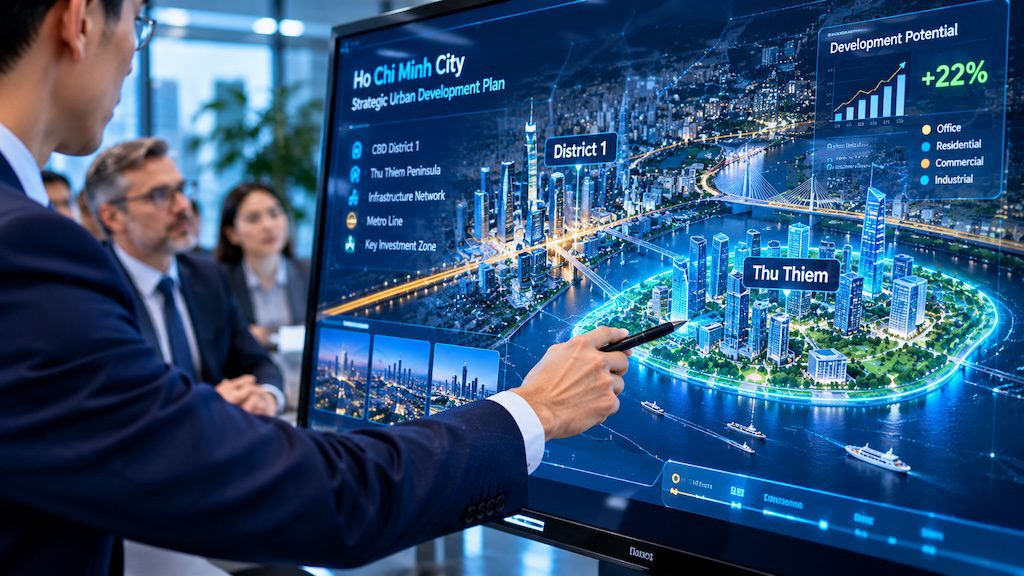
The “Dual-Core” model between the existing District 1 CBD and the Thu Thiem Fintech Hub creates diversity in allocating commercial real estate investment capital flows.
Infrastructure push and the boom of Grade A+ office real estate
To realize the ambition of the financial hub, the connecting infrastructure system is being accelerated to completion at an unprecedented pace.
Metro Line 1 (Ben Thanh – Suoi Tien) coming into operation, along with Thu Thiem 2 Bridge (Ba Son Bridge) and Thu Thiem 3 Bridge (Tran Dinh Xu Bridge – under planning) are erasing the distance between the two urban cores.
Synchronized transport infrastructure is the direct catalyst for the new capital flow to pour strongly into the office real estate segment.
Global financial institutions have extremely strict requirements for their workplaces.
They not only need a large floor area (over 1,000m2/column-free floor) but also require the building to achieve clean energy certificates, a biometric security system, and a redundant multi-directional Internet connection.
Current market reality (2026) shows that the supply of international-standard Grade A+ offices in HCMC is still in a state of severe scarcity.
This supply-demand mismatch creates a monopoly profit opportunity for developers with sufficient potential to develop office towers in Thu Thiem.
Long-term pre-lease contracts from technology and financial corporations will ensure the Internal Rate of Return (IRR) is at a very high level.
To optimize the workspace and meet the strict aesthetic standards of the financial elite, interior design and spatial layout according to Eastern standards combined with modernity is a sharp competitive advantage.
B2B investors can consult the commercial space architecture handbook from N.N REALTY to upgrade premises, thereby maximizing the rental price per square meter.
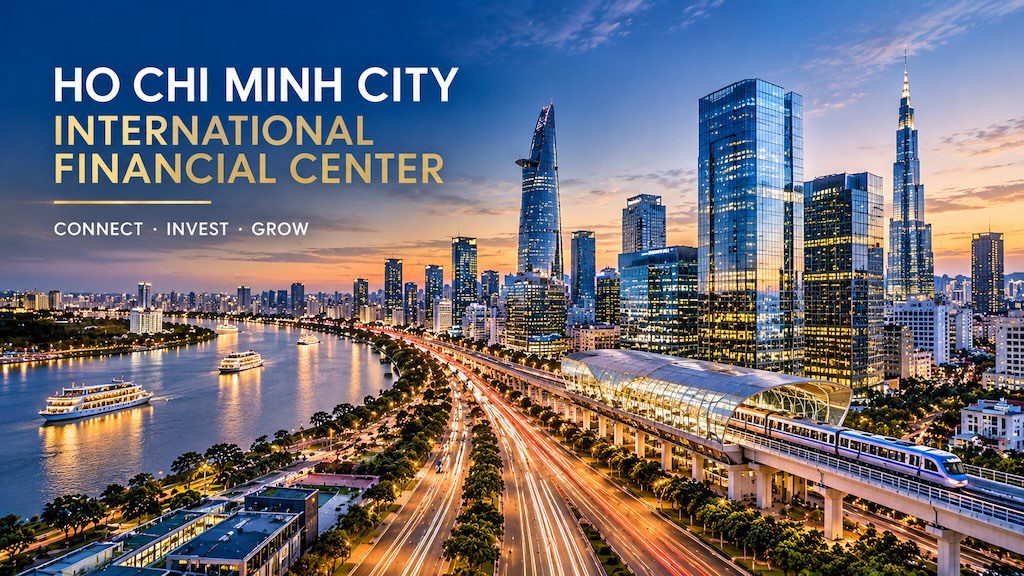
Synchronized transport infrastructure connecting the two urban cores is the direct catalyst for the new capital flow to pour strongly into the Grade A+ office real estate segment.
The Role of Advanced Digital Infrastructure
A world-class financial center cannot exist without a world-class digital backbone.
The influx of high-frequency trading firms, fintech startups, and major data-driven financial institutions requires telecommunications infrastructure with near-zero latency and absolute reliability.
This necessitates massive investments in high-capacity submarine cables, expansive 5G networks, and Tier IV data centers located within or in close proximity to the financial district.
For B2B investors and tech infrastructure providers, this presents a monumental opportunity. Securing the rights to develop and operate these critical digital assets will be as competitive—and potentially as lucrative—as acquiring the prime real estate parcels themselves.
Mitigating Sovereign and Regulatory Risks
Despite the immense potential, foreign investors must carefully navigate sovereign and regulatory risks. The transition from a centrally planned framework to a liberalized financial sandbox involves inevitable bureaucratic friction.
Changes in tax policies, capital repatriation rules, or the sudden implementation of new compliance requirements can significantly alter the risk-reward profile of major investments.
Therefore, comprehensive risk mitigation strategies are essential. This includes structuring investments through favorable bilateral investment treaties (BITs), securing robust political risk insurance, and engaging in continuous, proactive dialogue with local regulatory bodies.
Institutional investors who fail to adequately map and hedge against these regulatory uncertainties may find their capital trapped or subjected to unforeseen levies, undermining the viability of their long-term strategies.
Unlocking foreign capital and the M&A legal corridor
The vitality of the financial hub depends entirely on its ability to absorb the new capital flow from abroad. However, disbursing billions of USD into land fund acquisition (M&A) deals or wholesale commercial real estate purchases in Vietnam always faces specific legal barriers.
According to the latest Land Law and Real Estate Business Law, foreign direct investment (FDI) enterprises have been relaxed many rights in business and project development.
Even so, the process of determining land use fees and land allocation procedures for large projects in Thu Thiem still requires patience and high professional expertise.
Besides, the application of specific mechanisms for the financial hub (such as corporate income tax (CIT) exemption/reduction for financial technology sectors, long-term residence visa support for foreign experts) is still in the process of finalizing guiding decrees.
The lack of legal certainty can make private equity funds hesitate when making disbursement decisions.
To prevent the legal risk of “suspended capital”, conducting a comprehensive Legal Due Diligence is a mandatory step.
Multinational corporations and foreign funds should entrust the entire M&A transaction structuring process, and applying for the Investment Registration Certificate (IRC) to the commercial law consulting team of N.N SERVICE.
The intervention of B2B experts will establish a solid safety corridor, ensuring the new capital flow is injected into the right target and absolutely complies with current regulations.

Acquiring land funds or long-term leasing premises at the financial center requires an extremely strict legal Due Diligence process to protect foreign capital flows.
Feng shui impacts and the philosophy of creating financial value
A delicate intersection between economics and Eastern philosophy in the process of forming the financial hub is the Feng Shui factor.
The location of the Thu Thiem peninsula is embraced by the winding Saigon River, forming a terrain of “Water in front, mountain in back”, evaluated by feng shui masters as the navel of the Dragon Vein, a place where energy gathers and wealth is extremely prosperous.
For Asian financial investors (especially from Singapore, Hong Kong, Japan), the Feng Shui factor plays a decisive role in choosing the location for the Headquarter or trading center.
Planning the road network, parks, and the viewing direction of towers in Thu Thiem always prioritizes the circulation of “Water energy”, symbolizing the ceaseless flow of the new capital flow.
When choosing commercial premises, whether to buy or lease, investors should consult architectural feng shui experts from N.N REALTY.
Correctly positioning the direction of the transaction room, or the location of the central control room (Data Center) not only brings psychological peace of mind but also activates prosperous business energy, protecting and multiplying the massive asset volume of the enterprise.
Frequently Asked Questions (FAQ) about the HCMC Financial Center
Below are the 6 strategic questions that financial institutions and private equity funds frequently ask when analyzing the financial hub and evaluating the profitability potential of the new capital flow:
1. What is the biggest difference between the financial hub and Singapore or Hong Kong?
2. Which industries will directly benefit from the formation of this center?
3. What tax incentives does the Government have to attract the new capital flow into the Thu Thiem area?
4. Are foreign investment funds allowed to make bulk sales of office floors in Thu Thiem?
5. What is the biggest risk when pouring capital to anticipate the Financial Center planning at the present time?
6. How can an international financial corporation establish a headquarters fastest in Thu Thiem?
Conclusion
The shaping of the financial hub is not just a macro plan on paper, but an existing economic supercycle, promising to completely change the face of Vietnam’s commercial real estate.
The new capital flow from global institutions is frantically searching for safe-haven assets capable of outstanding profitability in central cores like District 1 and Thu Thiem.
However, this billion-dollar opportunity always comes with strict barriers regarding green standards (ESG), technology infrastructure, and especially legal transparency in cross-border M&A transactions.
To transform ambition into successful acquisition deals, private equity funds, real estate developers, and multinational corporations need a strategic consulting partner who deeply understands the operational rules of the host market. The N.N GROUP ecosystem proudly brings a comprehensive “All-in-One” B2B solution suite, accompanying your business:
- Initialize spatial position with N.N REALTY: Exploit off-market data on Grade A+ office spaces and strategic land funds in the core of the financial hub. Our team of brokerage experts will represent the business to position assets, evaluate architectural feng shui, and negotiate premise acquisitions with the most optimal value advantage.
- Protect legality and finance with N.N SERVICE: In parallel with the premise selection process, our senior lawyer team will perform in-depth Legal Due Diligence for M&A transactions. We assist businesses in completely untangling knots in FDI Investment License application procedures, ensuring the organization’s incoming investment is always safely protected and absolutely complies with all state management mechanisms.
Don’t let a lack of macroeconomic information hinder your plan to dominate commercial space at Vietnam’s future “Wall Street”.Let the N.N GROUP ecosystem become the guiding compass, maximizing the protection of investment assets and creating a market-dominating position for your business today!
Connect with Real Estate Investment and M&A Legal Consulting