

HCMC Industrial Real Estate 2026: Criteria for Choosing Factories and Experience in Negotiating Lease Contracts
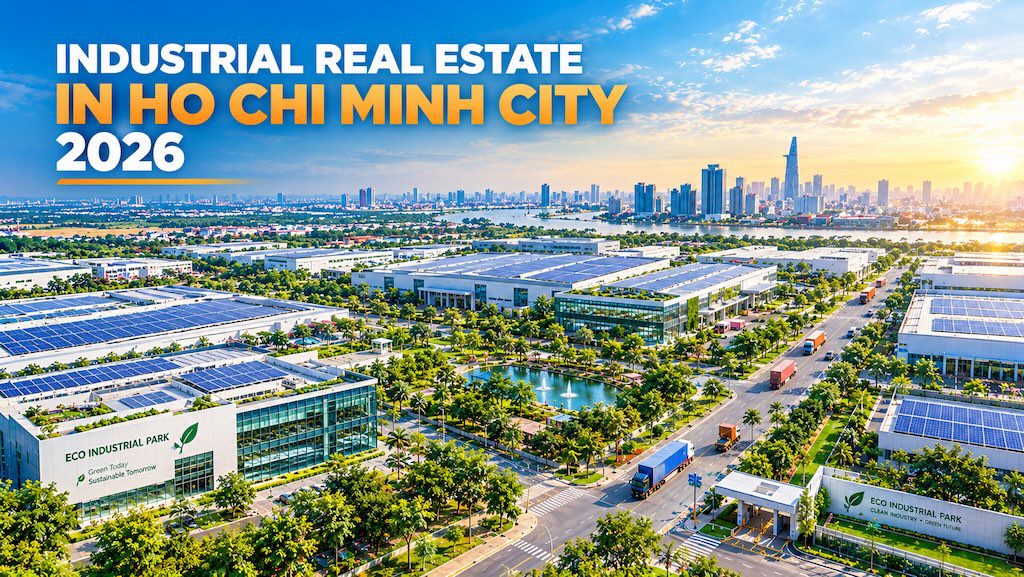
Entering the era of the new-generation global supply chain, the HCMC industrial real estate market is witnessing a historic transformation. No longer the era of cheap, labor-intensive export processing zones, the 2026 investment picture is being redrawn by “eagles” in the semiconductor, high-tech, biopharmaceutical, and cross-border e-commerce sectors. This creates immense pressure on infrastructure supply, making the race for hunting and factory leasing HCMC more fierce than ever.
For multinational enterprises (MNEs) and foreign direct investment (FDI) companies, signing a million-dollar contract for factory leasing HCMC is not merely a problem of storage space or assembly line installation. It is a strategic decision within the HCMC industrial real estate sector that directly affects operational capacity, logistics costs, talent attraction, and especially compliance with strict local legal regulations.
Understanding those concerns, this in-depth article is designed as a strategic orientation handbook. We will comprehensively dissect the core criteria for evaluating the quality of HCMC industrial real estate, while providing top-tier negotiation arts for factory leasing HCMC to help business owners optimize capital expenditure (Capex) and perfectly control legal risks throughout the project lifecycle.
Macro expert’s perspective: The scarcity of clean land funds in the core areas of HCMC (such as District 7, Tan Binh, Thu Duc City) is pushing rental prices to record highs. In this context of HCMC industrial real estate, the trend of factory leasing HCMC using Ready-Built Factories (RBF) and multi-story factories holds an absolute advantage. Evaluating HCMC industrial real estate is no longer just measured in square meters, but by the volume of clear space, floor load capacity, and green certificates (ESG).
Market context: The thirst for high-quality supply
Before diving into technical criteria, investors need to grasp the macroeconomic market’s pulse. Through the in-depth market analysis newsletters from N.N GROUP, it is evident that the supply of HCMC industrial real estate is almost 100% occupied in traditional areas. New growth drivers are currently focused on expansion projects in the Saigon Hi-Tech Park (SHTP), specialized eco-industrial parks, and the rise of multi-story factories to meet the demand for factory leasing HCMC.
The supply chain shift trend (China +1) combined with the strong surge in urban logistics demand (Last-mile delivery) has completely changed the portrait of customers seeking HCMC industrial real estate and engaging in factory leasing HCMC. They don’t just need a roof; they need a synchronized ecosystem including: stable high-capacity power supply, standard A wastewater treatment systems, 5G telecom platforms, and a working environment that meets international labor safety standards.
Core criteria when selecting industrial property
Selecting the wrong premises will lead to disastrous consequences: ballooning renovation costs, production lines shaking due to weak floors, or container trucks unable to maneuver on the campus. To eliminate these risks, businesses need to apply a 5-pillar evaluation framework when choosing HCMC industrial real estate and surveying for factory leasing HCMC.
| Key Evaluation Criteria | Technical Specifications & Core Requirements |
|---|---|
| 1. Location and Logistics Network for factory leasing HCMC | Travel time from the factory to Cat Lai Port, Hiep Phuoc, and Tan Son Nhat/Long Thanh Airport. Connection radius to Ring Road 3 and arterial expressways. |
| 2. Floor Load Capacity & Foundation Quality | Grade A factories must have a floor load capacity of 2.0 tons to 3.0 tons/m2. The foundation must be treated with hardener floor troweling, anti-static epoxy paint, and be absolutely crack-proof. |
| 3. Clear Height | The height from the floor to the lowest point of the roof structure (A-frame) must reach a minimum of 7m to 9m. This height determines the ability to install overhead cranes and multi-level storage racks. |
| 4. Electricity, Water & Telecom Infrastructure | The capacity of the private transformer station must be large (from 1000 KVA upwards), with a backup generator. The water supply and wastewater treatment system must be connected directly to the IP’s monitoring station. |
| 5. Green Standards (ESG) & Design | The factory should have a LEED or Lotus certificate. Architectural design optimizing natural ventilation, lighting via skylights, and roofing with solar panels to minimize Carbon emissions. |
Besides the dry technical factors, an aspect increasingly prioritized by Asian business owners (Japan, South Korea, Taiwan) and Vietnam when evaluating HCMC industrial real estate for factory leasing HCMC is the space’s energy. Consulting the factory feng shui knowledge handbook from N.N REALTY to choose the main door direction to welcome good fortune, the placement of the executive office, and the landscape layout will contribute to creating a prosperous working environment.
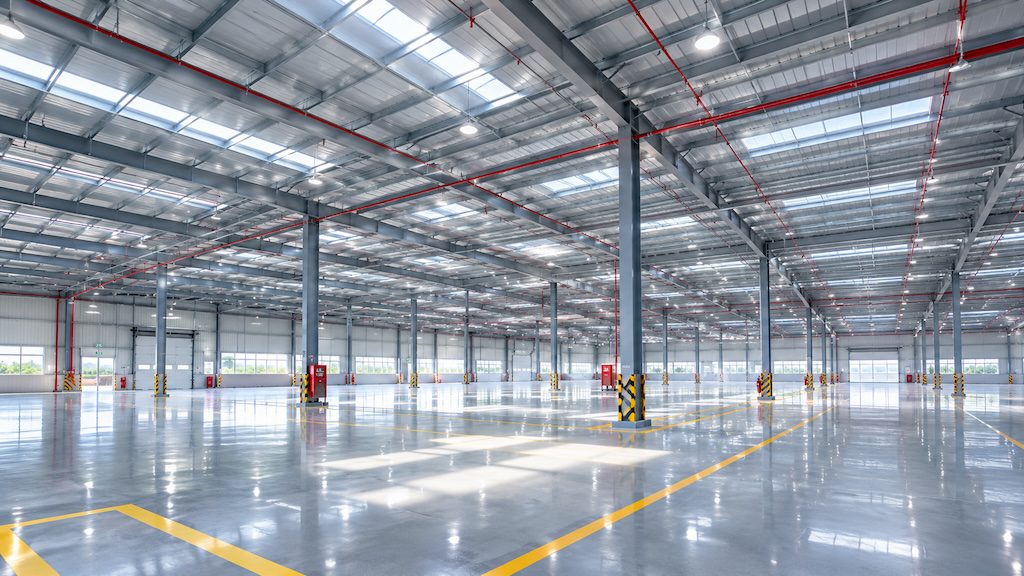
Clear height and floor load are two core criteria when evaluating factory quality to ensure the optimal choice for factory leasing HCMC.
Lease contract negotiation experience: Cost optimization and risk control
After targeting the “golden coordinates” through the reputable HCMC industrial real estate project portfolio of N.N REALTY, businesses will enter the real “battlefield”: Lease contract negotiation. A professional contract for factory leasing HCMC often spans dozens of pages with intertwined legal and financial terms.
Never accept template contracts from the developer without rebuttal. To protect profit margins, you need to master the negotiation table through the following strategic terms for factory leasing HCMC:
| Negotiation Items | Potential Risks for the Lessee | Negotiation Recommendations & Finalization |
|---|---|---|
| 1. Rental Rate and Escalation Rate | Rent skyrockets according to the market after each cycle (usually 2-3 years). IP Management Fees are adjusted indiscriminately. | Fix the ceiling price increase margin (Cap rate) at no more than 5% – 7%/cycle. Require a clear separation of land rent, factory rent, and operation management fees. |
| 2. Fit-out period grace time | Installing heavy machinery lines often takes 2-4 months. Charging rent right at the handover will cause a deficit in initial cash flow (Capex). | Negotiate a rent-free period (only paying service fees) from 1 to 3 months depending on the area and complexity of the installation work. |
| 3. Early Termination Clause | The business changes scale and wants to move but is penalized by losing the entire deposit (usually 6 months’ rent) and compensating for damages. | Establish a “Break Clause”. Allow contract termination after the first 3-5 years with a penalty of only 1-2 months’ deposit if a 6-month notice is given. |
| 4. Sub-leasing rights | The business downsizes production and has surplus area, but the contract strictly forbids a third party from sharing the lease, wasting space. | Insert a clause allowing partial subleasing (with the developer’s written consent not being unreasonably delayed) into the original contract. |
An extremely important note in the negotiation art of factory leasing HCMC is the issue of Handover conditions. The handover protocol must detail every lighting system, the state of the epoxy floor paint, and the transformer station capacity. Many FDI enterprises have suffered huge compensation claims upon returning the premises simply because they did not carefully record the concrete floor’s cracking status on the day they received the keys.
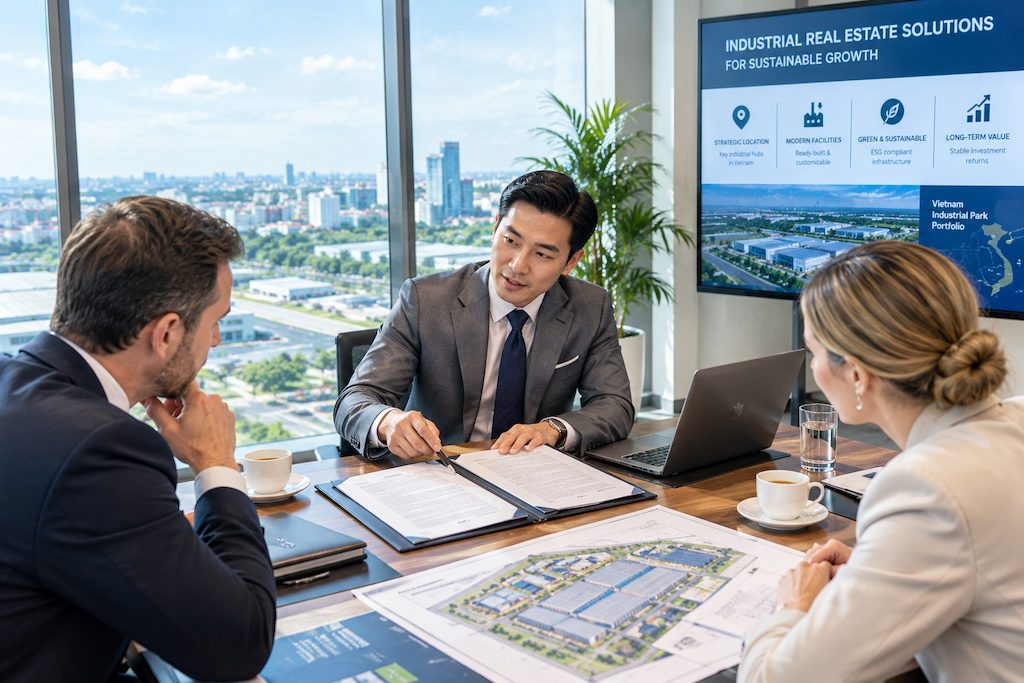
The involvement of consulting experts helps businesses optimize commercial terms in HCMC industrial real estate through a solid contract for factory leasing HCMC.
Legal Risk Management: Fire Safety, EIA, and Business Licenses
A premise of HCMC industrial real estate, no matter how prime its location or perfect its structure, is just a worthless concrete block if it lacks legal transparency. Legality is the final checkpoint determining the survival of an investment project.
Market reality shows that many spontaneous factory areas or renovated old factories have not completed as-built procedures or Fire Prevention and Fighting (PCCC) acceptance according to the latest standards (which have been strictly tightened since 2024). If a business accidentally engages in factory leasing HCMC with these legal entanglements, the consequences will be: Inability to register the headquarters address, inability to obtain an Investment Registration Certificate (IRC), and all production activities being suspended indefinitely.
To ensure absolute safety, before transferring the deposit, investors must request the asset owner to provide notarized copies of the following core documents:
- Certificate of Land Use Rights and Assets Attached to Land (Pink Book): Verify that the usage purpose is Industrial Park Land / Production and Business Facility Land and that the factory asset has been completed and updated on the book.
- Fire Safety Acceptance Document: Issued by the Fire Police agency. Pay special attention to whether your manufacturing industry matches the fire risk classification for which the factory was designed.
- Environmental Impact Assessment (EIA): Ensure the enterprise’s manufacturing industry is on the list of permitted investment attraction industries of that Industrial Park. If you produce chemicals, textiles, or electroplating, EIA appraisal is a massive barrier.
The complexity of Vietnam’s legal system requires a highly specialized approach. Instead of fumbling through the maze of administrative procedures on their own, smart corporations always seek out professional legal and business establishment consulting experts at N.N SERVICE. The legal team will perform Due Diligence on all factory documents, while smoothly designing the roadmap for IRC, ERC, and sub-license applications, helping the factory commence operations on schedule.
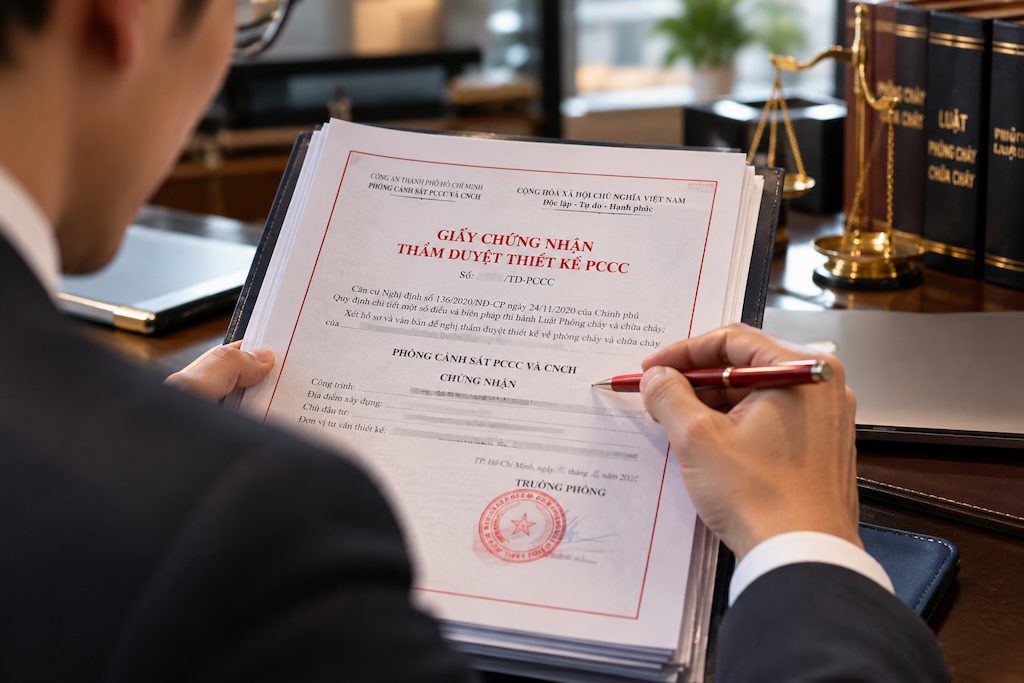
Thoroughly appraising Fire Safety licenses and Environmental Impact Assessments (EIA) is an indispensable step.
Frequently Asked Questions (FAQ) about factory leasing HCMC
Below are the 6 most practical questions that foreign investors frequently ask when working with the N.N GROUP ecosystem during the process of searching the HCMC industrial real estate market and executing factory leasing HCMC:
1. What is the ideal term for a lease contract in an industrial park?
For Ready-Built Factories (RBF), the most popular lease term usually ranges from 3 to 5 years. Signing a contract for under 3 years is often less accepted by developers, or the rental price will be very high. If you invest in heavy machinery lines with large relocation costs, you should negotiate a long-term lease of 5 – 10 years with priority extension conditions.
2. Are FDI enterprises allowed to lease land in IPs to build their own factories?
Absolutely allowed. This is called a one-off payment or annual payment land lease. However, this form is only suitable for large corporations with an area requirement of 1 hectare (10,000 m2) or more and an investment capital scale of tens of millions of USD. The process of applying for licenses, approving 1/500 planning, and self-building usually takes 12 to 18 months.
3. What is the current deposit level according to market practices for HCMC industrial real estate?
According to market practices, the deposit amount is equivalent to 3 to 6 months’ rent (excluding VAT and management fees). This amount will be retained by the developer throughout the contract term and refunded (without interest) at the end of the contract, after deducting damage compensations (if any).
4. How do I know if my manufacturing industry is allowed to operate in that factory?
Each Industrial Park, upon establishment, has a general Environmental Impact Assessment (EIA) Approval document, clearly listing the “List of industries permitted to attract investment”. You need to provide the VSIC code and detailed production process to the legal consulting team of N.N SERVICE for cross-checking before deciding to lease.
5. What notable changes are there in the current Fire Safety standards for manufacturing factories?
From 2024, Fire Safety regulations (especially QCVN 06:2022/BXD and amended documents) have elevated requirements for fire-resistant materials, escape routes, and smoke extraction systems. Many old factories using poor-quality fire-retardant paint fail acceptance. Ask the developer to commit to taking responsibility for maintaining the validity of the entire building’s Fire Safety system.
6. If the factory suffers structural damage due to storms and floods, who is responsible for the repairs?
This issue depends on the “Force Majeure” clause and maintenance obligations in the contract. Normally, the developer (Lessor) is responsible for repairing damages related to load-bearing structures (roofs, columns, beams, surrounding walls). For safety, the leasing enterprise must purchase “Property All Risk Insurance” for their machinery and goods.
Conclusion: Master the game with the N.N GROUP ecosystem
The journey of searching, evaluating, and establishing rights for factory leasing HCMC is a heavy-duty test of the governance capacity of every FDI enterprise. In a market of HCMC industrial real estate that is developing at a breakneck pace, competition lies not only in price but in the speed of decision-making based on transparent, accurate information flows and a thorough understanding of asset-protecting legal barriers.
To turn complex legal risks into a competitive advantage, and transform a dry lease contract into an optimal cash flow protection tool, international investors cannot walk alone in the HCMC industrial real estate landscape. The N.N GROUP ecosystem is proud to be a comprehensive B2B strategic partner, delivering a closed “All-in-One” solution from the moment of searching for physical space until the factory lights up and goes into operation:
- Initialize spatial advantages with N.N REALTY: Exploit the exclusive data warehouse on the industrial park network, Grade A ready-built factories, and urban logistics centers to find the perfect physical space. Our commercial brokerage team will represent the business to set up the negotiation table, squeeze escalation rates, and secure the most advantageous commercial terms, creating a solid foundation for the project.
- Protect legality and finance with N.N SERVICE: We act as legal architects, conducting in-depth Due Diligence on the factory’s Fire Safety and EIA status. Concurrently, our team of lawyers and accountants will completely untangle the knots in applying for investment licenses (IRC, ERC), business registration, and establishing a financial structure compliant with international standards.
Don’t let a wrong premises selection decision or a loose contract derail your global development vision. Let the N.N GROUP ecosystem become your guiding compass, protecting your assets and creating the most flawless factory leasing HCMC experience for your business in the HCMC industrial real estate market today!