


The High-End Retail Space Market in Ho Chi Minh City: A Strategic Destination for International Brands
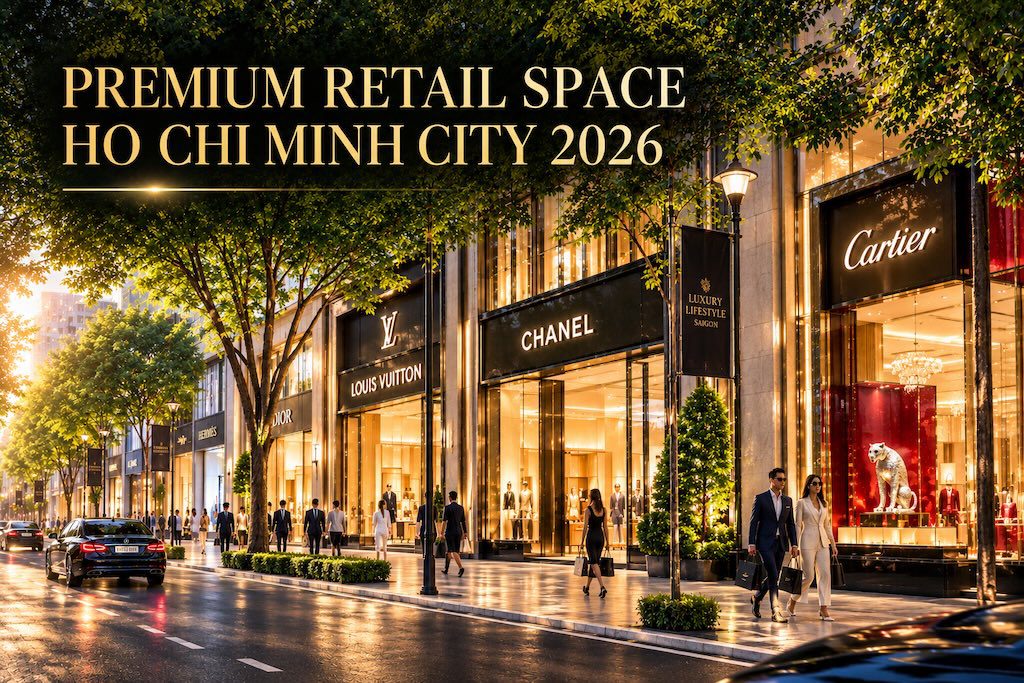
The strong rise of the middle and upper classes in Vietnam is creating a massive gravitational pull, turning the S-shaped land into one of the most dynamic consumer markets in Asia. At the epicenter of this boom, the high-end retail space market is witnessing unprecedented competition for prime retail space in HCMC.
Not stopping at standard stores, international brands in the fields of luxury fashion, high-end cosmetics, F&B (Food & Beverage), and supercars are frantically hunting for the most prime locations to establish magnificent Flagship Stores, aiming to affirm their exclusive positions.
For multinational corporations and large-scale retail chains, accessing the high-end retail space market to secure premium retail space in HCMC is not simply a problem of square meters or rental prices.
It is a multidimensional strategic decision, encompassing the analysis of foot traffic, brand value positioning, complex commercial negotiation arts, and especially the ability to overcome strict local legal barriers (typically the ENT – Economic Needs Test regulations). The success or failure of brands when entering the Vietnamese market depends heavily on this initial step in the retail space market.
The in-depth article below is designed as a macroeconomic and practical lens, exclusively for Expansion Managers, Chief Strategy Officers, and institutional investors.
We will dissect the entire picture of the high-end retail space market, providing a standard location evaluation criteria set, decoding core lease contract terms, and outlining the safest legal roadmap so that brands can confidently conquer this potential market of over 10 million people by securing the best retail space.
Macro analyst’s perspective: The scarcity of commercial land in the core of District 1 (Dong Khoi, Le Loi, Nguyen Hue streets) is pushing rental prices for retail space within the high-end retail space market to record highs, rivaling bustling areas in Bangkok or Singapore. In the context of extremely limited new supply, international brands are forced to compete fiercely for retail podiums of Grade A buildings or shift their vision to emerging financial centers like the Thu Thiem Urban Area. Delay in decision-making will cause businesses to lose the opportunity to reach upper-class customers.
Overview and driving forces of the high-end retail space market
Before diving into technical and legal criteria, we must clearly understand the macroeconomic drivers reshaping the high-end retail space market and the demand for premium retail space in HCMC. According to in-depth market analysis reports from N.N GROUP, the strong recovery of international tourism along with the steady growth of domestic GDP has created a solid launchpad for the retail industry, attracting many international brands.
The change in Consumer Behavior is the second key factor. Today’s upper-class customers do not just buy a product; they buy an “experience.” This forces international brands to abandon small, stereotypical store models and shift towards establishing highly experiential spaces (Experiential Retail) in the high-end retail space market.
These stores require larger areas, higher ceilings, wider and more impressive facades, and complex mechanical, electrical, and plumbing (MEP) systems to integrate virtual reality (VR) technology or specialized VIP Lounges.
This shift exacerbates the thirst for premium retail space in HCMC. Traditional Shopping Malls are racing to renovate and restructure their Tenant Mix to make room for luxury giants, creating a chain-reaction displacement wave across the entire high-end retail space market, heavily influenced by international brands.
Core criteria when selecting strategic retail space in HCMC
Choosing the wrong location will lead to financial disaster: initial investment costs (Capex) evaporate, revenue is insufficient to cover operating expenses (Opex), and most seriously, brand positioning is degraded. To ensure success, international brands need to apply a multi-dimensional evaluation framework, going beyond mere rental numbers to lease retail space in HCMC within the high-end retail space market.
Below is a 5-criteria in-depth evaluation matrix used by top commercial real estate experts to quantify the value of a location:
| Key Evaluation Criteria | Technical Requirements and Value Brought to international brands |
|---|---|
| 1. Visibility & Exposure | Facade must be at least 10m wide, unobstructed view. Prioritize large intersections or bustling High streets. Brand recognition from afar is a vital factor for international brands seeking retail space. |
| 2. Foot traffic & Customer Quality | Not just counting passersby, but analyzing the demographics of the area. The retail space in HCMC must be located in the movement flow of high-income customers, residents of luxury projects, or international tourists, which is exactly what brands target in the high-end retail space market. |
| 3. Technical Specifications | Minimum clear ceiling height of 4.5m – 5m to design luxurious spaces. Floor load capacity must be large enough (especially for car/jewelry showrooms). Fire safety (PCCC), water supply, and backup power systems must meet international standards suitable for the retail space market. |
| 4. Tenant Mix | Brand synergy is a core principle. Luxury foreign labels cannot be placed next to budget stores. An ideal premise within the high-end retail space market must be in an ecosystem of peer brands to create a “Halo effect.” |
| 5. Accessibility & Parking Facilities | Often overlooked but extremely important for retail space. The premises must have dedicated parking areas or Valet Parking services, ensuring a seamless and private experience for VIP guests right from the moment they step out of their cars. |
Besides physical and commercial factors, corporations, especially Asian organizations, always pay special attention to feng shui when establishing stores. The harmony of life force flows, the direction of the door to welcome wealth, and space layout according to N.N REALTY’s feng shui architectural handbook will contribute to a prosperous business environment.
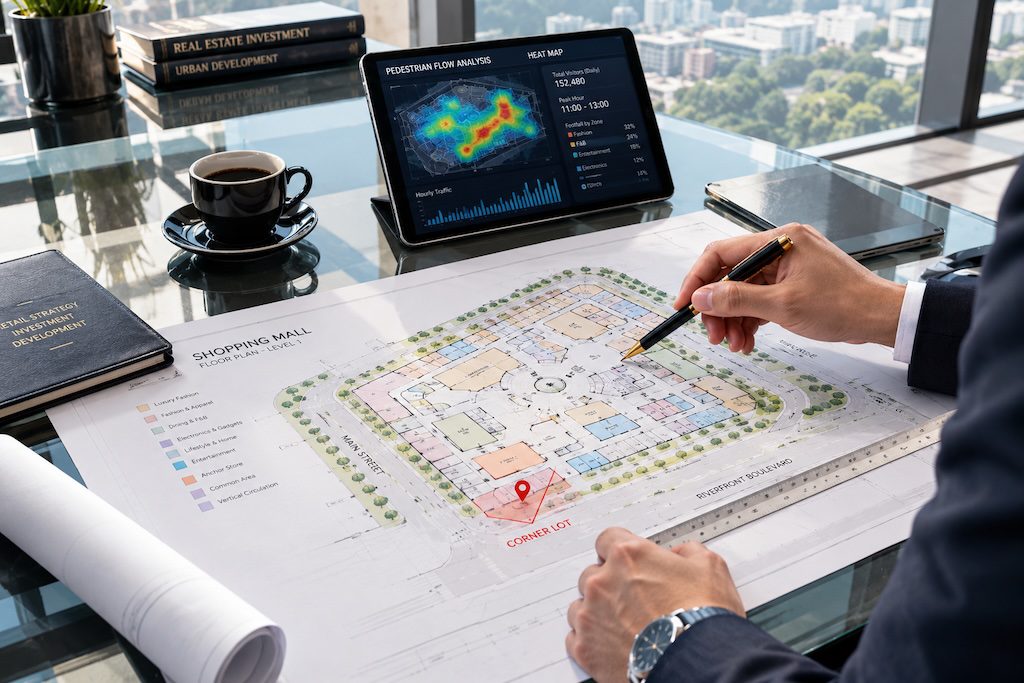
Visibility and Foot traffic are two vital criteria when valuing a location for international brands.
The rise of new retail centers outside the CBD in the high-end retail space market
As the land fund in District 1 gradually becomes cramped and expensive, the high-end retail space market is witnessing strong decentralization. Brands are beginning to shift their vision to new “growth poles,” which offer larger spaces at more reasonable costs while still reaching the target customer base for retail space.
Most prominent in this trend is the rise of the Thu Thiem New Urban Area and the Thao Dien area (Thu Duc City). Thu Thiem, oriented to become an international financial center, provides Retail Podiums of Grade A+ buildings with breakthrough architectural designs, open green spaces, and panoramic views of the Saigon River. This is a “gold mine” for international brands wanting to create large-scale Flagship Stores that the District 1 sector cannot accommodate.
Meanwhile, Thao Dien brings a completely different breath of air. This place concentrates the foreign expert community (Expats) and the Vietnamese upper class, creating a perfect niche market for high-end F&B models (Fine Dining), fashion Boutiques, and imported food supermarkets.
Hunting for old villas or low-rise complexes here to renovate into premium retail space in HCMC is an investment trend yielding extremely impressive return rates. The B2B brokerage experts at the N.N REALTY ecosystem hold an exclusive basket of these strategic locations, ready to assist businesses in staying ahead of the curve.
Anatomy of legal barriers: Retail licenses and ENT Regulations for international brands
Owning a beautiful location and abundant capital is not enough. The biggest barrier, and also the reason why many foreign chains “fall off their horses” when entering the Vietnamese market, is the complex legal system, especially regulations related to licensing retail activities for foreign direct investment (FDI) organizations.
Unlike normal service industries, the distribution and retail sector is strictly controlled to protect the domestic market. Any foreign entity wanting to establish their first store or expand their chain to acquire retail space in HCMC must face the following legal checkpoints:
- Investment Registration Certificate (IRC) and Enterprise Registration Certificate (ERC): Must ensure the retail distribution industry code (VSIC) is fully recorded and complies with Vietnam’s international commitments (WTO, CPTPP).
- Retail Establishment License: This is a mandatory sub-license. For the first retail establishment, the procedure is relatively favorable. However, the real complexity lies in the second retail establishment onwards.
- Economic Needs Test (ENT) Regulation: When foreign entities want to open a second retail establishment (except when the establishment is under 500m2, located in a shopping mall, and is not a convenience store or mini supermarket), they must pass the ENT test. The ENT Council will evaluate factors: regional market scale, number of existing retail establishments, and the impact of the new establishment on market stability and the residential community. This is a massive barrier, capable of stalling expansion plans for months.
Furthermore, for specific sectors like high-end F&B, businesses must also meet a series of licenses regarding Food Safety and Hygiene, alcohol retail licenses, and especially the Fire Prevention and Fighting (PCCC) appraisal certification system, which is being strictly tightened in Vietnam.
Instead of facing stagnation risks alone, smart corporations always entrust this entire process to the legal and licensing consulting expert team of N.N SERVICE. With an understanding of local government operational mechanisms, N.N SERVICE will design a smooth licensing roadmap, helping businesses open their stores on schedule.
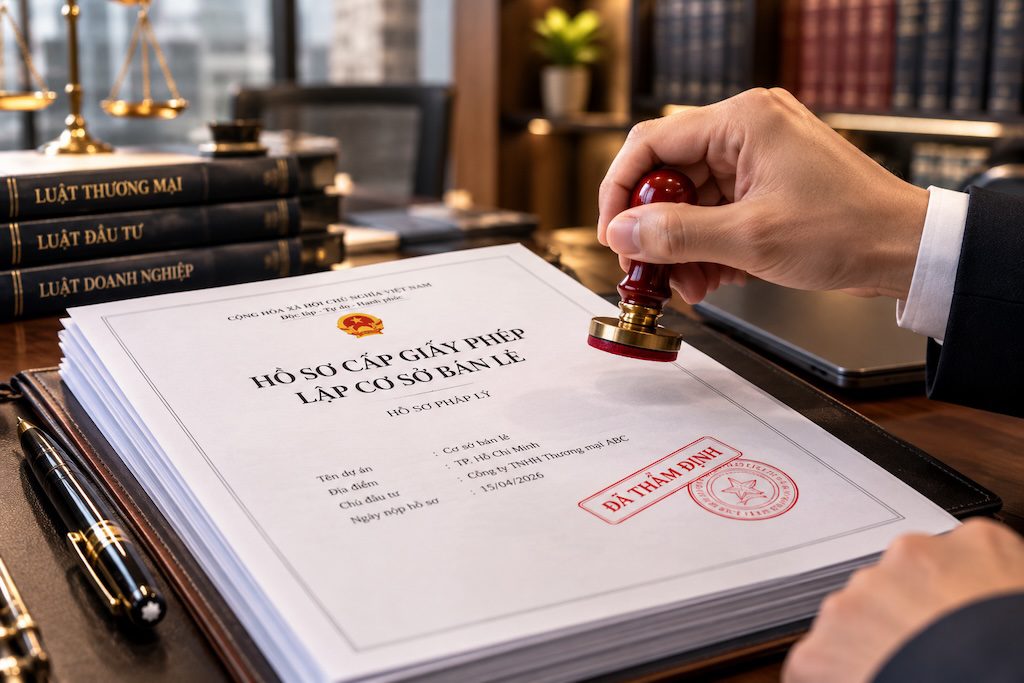
Overcoming the ENT (Economic Needs Test) barrier is the biggest legal challenge when targeting the high-end retail space market.
The art of lease contract negotiation in the high-end retail space market
Once a prime location for retail space has been secured and legal feasibility confirmed, the business will enter the commercial negotiation round. In a market where landlords often hold the upper hand due to supply scarcity, foreign tenants need to equip themselves with sharp negotiation tactics to protect long-term financial interests.
A lease contract does not just have a base rent, but a matrix of intertwined financial terms. Below are the key points that need to be carefully analyzed at the negotiation table:
| Commercial Negotiation Item | Potential Risks for Tenants | Negotiation Recommendations and Term Finalization |
|---|---|---|
| 1. Rent Structure (Base Rent vs. Turnover Rent) | An overly high fixed Base Rent will create massive cash flow pressure during the initial opening months or when the market downturns. | Negotiate a combined price structure: A low fixed price combined with a Percentage of revenue (Turnover Rent). This structure forces the landlord to share business risks. |
| 2. Fit-out Period Grace Time | Flagship Stores often require extremely complex interior architectural designs, lasting 2 to 4 months. Paying rent during construction will burn Opex budgets. | Resolutely negotiate for a completely free rent period (Rent-free) during the actual construction time (only paying incurred management and utility fees). |
| 3. Fit-out Contribution Clause | The investment cost to upgrade a raw premise into a luxury standard store is a huge number, skyrocketing the initial investment cost (Capex). | Major brands can request the landlord to support a sum of money (Fit-out contribution) or provide a few more months of free rent to offset the cost of upgrading the asset for the landlord themselves. |
| 4. Co-tenancy Clause | The mall owner changes the tenant mix, bringing budget labels next to luxury stores, severely degrading brand positioning value. | Install a “Co-tenancy” clause: Allow the tenant the right to reduce rent or unilaterally terminate the contract if peer Anchor Tenants leave or the neighboring tenant mix is downgraded. |
Another fatal flaw in lease contracts is the clause on Handover Conditions and Reinstatement. Tenants must require the handover protocol to record in extreme detail the structural condition, HVAC capacity, and power supply to avoid unreasonable compensation claims worth tens of billions of VND at the end of the lease cycle. The intervention of real estate lawyers who understand commercial contracts will help patch all these legal loopholes.

Terms regarding the rent structure and fit-out grace period need to be negotiated sharply.
Frequently Asked Questions (FAQ) about retail space in HCMC
Below are the 6 most practical questions that investors and Expansion Managers frequently ask when working with the N.N GROUP ecosystem while searching for a location:
1. What is the current average rental rate for retail space in HCMC in District 1?
On core streets like Dong Khoi, Le Loi, and Nguyen Hue, asking rents are fluctuating from 150 USD to 250 USD/sqm/month (excluding VAT and management fees). At super-prime corner locations, prices can reach 300 USD/sqm/month due to market scarcity.
2. How is the ENT (Economic Needs Test) condition applied to brands wanting to open chains?
All FDI enterprises wanting to establish a second retail establishment onwards must undergo the ENT test, EXCEPT when that location has an area of under 500m2, is located in licensed shopping malls, and is not a convenience store or mini supermarket. Understanding this regulation helps businesses flexibly design store sizes to bypass complex ENT procedures.
3. When leasing a Retail Podium of an office building, what special technical aspects need to be noted?
For podium spaces, businesses must pay special attention to the Exhaust system, Grease trap, and backup power capacity. Many Grade A office buildings do not design MEP infrastructure for restaurants, making it impossible to construct facilities even after signing the lease.
4. What is the usual deposit for a lease contract?
According to market practices, the performance guarantee deposit is usually equivalent to 3 to 6 months’ rent (excluding VAT and management fees). This amount will be retained by the landlord throughout the contract term and refunded without interest when the transaction ends.
5. What is the ideal lease term to ensure profitability for a Flagship Store?
The investment cost (Capex) for a Flagship Store is usually very large (millions of USD). Therefore, the minimum contract term should be from 5 to 10 years to ensure asset depreciation and capital recovery. Short-term contracts (under 3 years) pose very high risks if the landlord reclaims the space or suddenly hikes the rent.
6. How to evaluate the legal risks of a Shophouse premise before depositing?
The biggest risk for townhouses is land use function and as-built status. Many locations are actually private houses, not yet converted to commercial business purposes. If intentionally leased, businesses will not be able to obtain Retail Licenses and Fire Safety Licenses. Requesting the N.N SERVICE legal team to appraise the Pink Book and Construction Permit is mandatory.
Conclusion: Holding a dominant position in the high-end retail space market with the N.N GROUP ecosystem
The journey of searching, negotiating, and establishing a space is a highly intellectual game, requiring a perfect combination of commercial strategic vision and a deep understanding of the local legal system. For global chains, a prime location is not just a place to generate revenue, but a powerful statement of class and brand positioning in the eyes of Vietnamese consumers.
In a market with scarce supply and surrounding legal barriers, multinational corporations cannot walk alone. Choosing a strategic B2B consulting partner, possessing transparent market data and superior legal processing capacity, is a vital factor to ensure the success of an expansion campaign for international brands. The N.N GROUP ecosystem proudly offers a closed “All-in-One” solution suite, accompanying businesses from their very first steps until the store officially lights up:
- Initialize spatial advantages with N.N REALTY: Possessing an off-market listings data network on the most prime locations in District 1, Thu Thiem, and Thao Dien. Our team of commercial brokerage experts will represent you to set up the negotiation table, squeeze escalation rates, install the most advantageous Co-tenancy clauses, and create a perfect business space, absolutely fitting the brand’s design language.
- Protect legality and operations with N.N SERVICE: We act as a solid legal shield, performing in-depth Due Diligence for every risk of the premise. Concurrently, the senior lawyer team will completely untangle knots in investment licensing procedures (IRC, ERC), overcome the ENT barrier, and finalize Fire Safety licenses, ensuring the store system goes into operation on schedule and strictly complies with legal regulations.
Don’t let a lack of information stall your plan to conquer Southeast Asia’s most attractive market. Let the N.N GROUP ecosystem become the guiding compass, maximizing the protection of your investment budget and creating exclusive commercial positions for your brands today!