

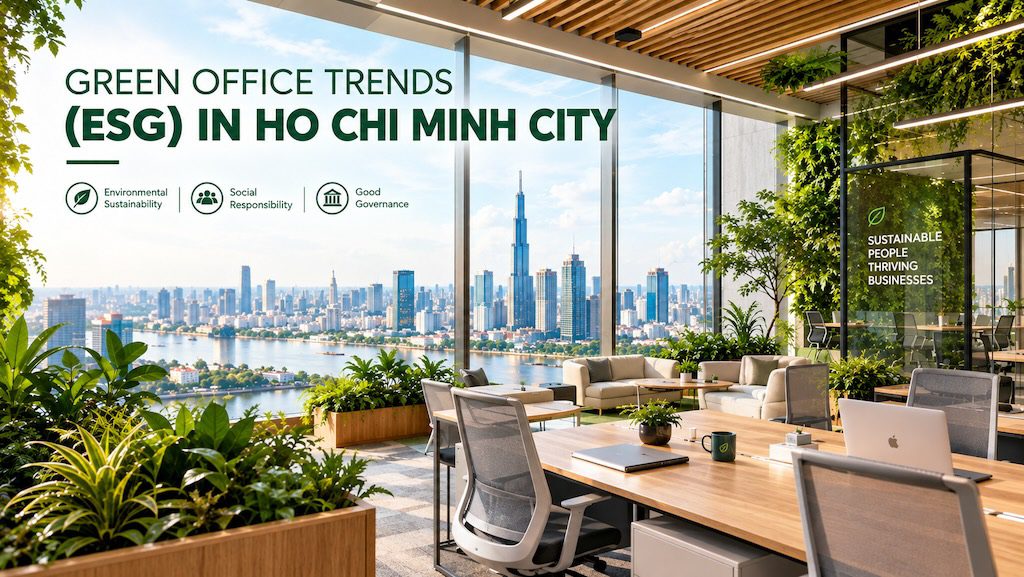
Green Office Trends (ESG) in Ho Chi Minh City: Competitive Advantages and LEED and LOTUS Certification Standards for Businesses
In the context of the global economy vigorously transitioning towards sustainable development, the ESG (Environmental, Social, and Governance) concept is no longer a hollow slogan in annual reports. In the economic center of HCMC, the green office ESG trend is completely reshaping the landscape of premium commercial real estate. Owning or leasing a workspace that meets these stringent LEED Lotus standards has become a new benchmark, defining the status of multinational corporations and large-scale enterprises.
For Chief Executive Officers (CEOs) and Chief Strategy Officers, embracing a green office ESG is not only a way to comply with environmental protection regulations but also a strategic move to optimize operational expenses (Opex) and enhance the physical and mental well-being of employees.
Simultaneously, this creates a powerful magnetic pull for the Millennial and Gen Z talent pool. Furthermore, a green office ESG is the most vivid proof of a corporate social responsibility commitment, helping businesses score absolute points in the eyes of international investment funds.
The in-depth article below will take you into the center of the workspace revolution. We will decode in detail the most powerful rating systems today, such as the LEED Lotus standards, deeply analyze the exclusive competitive advantages that a green office ESG brings, and outline a roadmap so your business can successfully integrate this model into its long-term development strategy.
Market analyst’s perspective: The scarcity of eco-standard Grade A buildings in the core center of District 1 and the Thu Thiem urban area is pushing the occupancy rate of this segment to record highs (over 90%). The shift toward an ecological office is not a fleeting trend, but a mandatory requirement for FDI organizations wanting to meet Net Zero carbon commitments by 2050. Delaying the adoption of LEED Lotus standards will cause businesses to lose crucial negotiation advantages in the international market.
Decoding the core value system of a green office ESG
Before delving into technical factors, we must clarify the nature of an ecological workspace. Many mistakenly believe that merely decorating with lots of plants or using recycled materials creates a green office ESG. In reality, this concept encompasses a much more complex ecosystem, built on the 3 pillars of ESG philosophy:
- E – Environmental: This factor requires the workspace to minimize its carbon footprint through efficient energy use, natural light optimization, application of energy-saving HVAC systems, and smart waste management. This is the core value shaping the modern sustainable trend.
- S – Social: The workspace must be designed around the human element (Human-centric design). This includes improving indoor air quality (IAQ), using non-toxic building materials (low VOCs), providing wellness amenities (gyms, relaxation areas), and ensuring diversity and inclusion in the work environment.
- G – Governance: This pillar emphasizes transparency in selecting sustainable material suppliers, establishing building operation regulations aimed at sustainable development goals, and strictly complying with international certifications like the LEED Lotus standards.
Through the macro analysis reports from N.N GROUP, it is evident that technology and financial corporations are pioneers leading the green office ESG trend in HCMC, turning the workspace into an extremely sharp brand positioning tool.
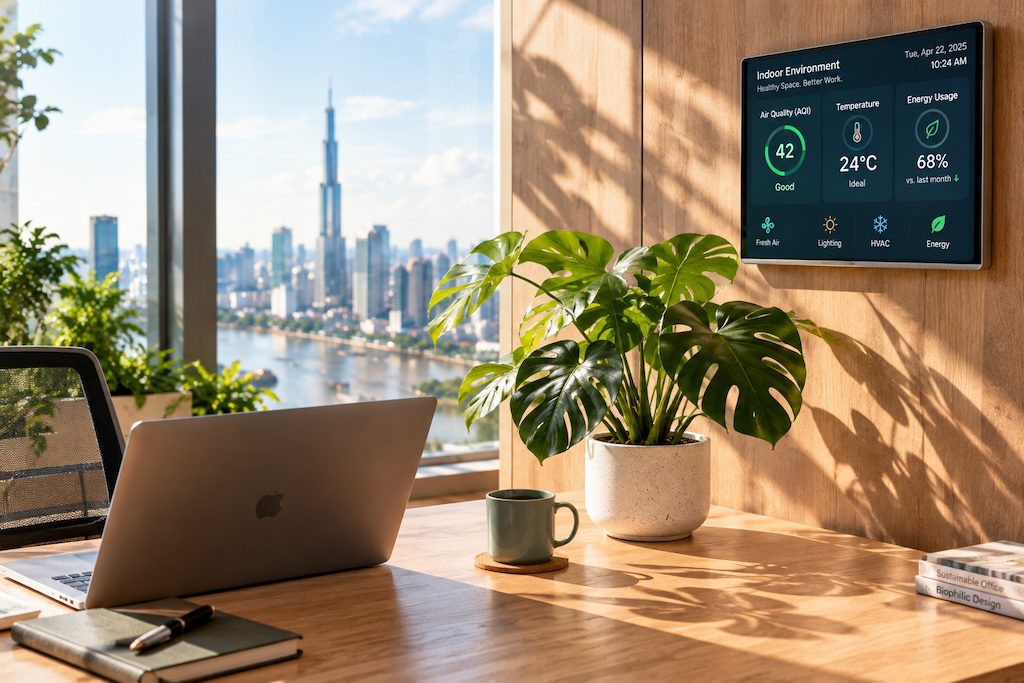
An ecological workspace is not just about planting trees but a smart energy and waste management system typical of a green office ESG.
Analyzing powerful certification systems: LEED Lotus standards
To quantify and certify the “green” level of a building or workspace, the global and Vietnamese commercial real estate markets rely on rigorous rating systems. Among them, the LEED Lotus standards are the two most standard and popular metrics today, acting as a “passport” to enter the green office ESG era.
Understanding the differences between these two certification systems is the first step for businesses to plan their design budget and select premises that fit their development strategy.
| Comparison Feature | LEED Standard (USA) | LOTUS Standard (Vietnam) |
|---|---|---|
| Issuing Agency & Prestige | Issued by the U.S. Green Building Council (USGBC). This is the most prestigious and widely recognized certification system globally, defining the benchmark for international sustainable office trends. | Issued by the Vietnam Green Building Council (VGBC). Specially designed and fine-tuned to suit the tropical monsoon climate and domestic construction industry practices. |
| Core Evaluation Criteria | Focuses strongly on 6 criteria: Location & Transportation, Sustainable Sites, Water Efficiency, Energy & Atmosphere, Materials & Resources, Indoor Environmental Quality. | Evaluates based on 7 criteria: Energy, Water, Materials, Ecology, Waste & Pollution, Health & Comfort, Adaptation & Mitigation (emphasizing climate change resilience). |
| Certification Levels | Divided into 4 strict levels: Certified, Silver, Gold, and Platinum. | Divided into 4 corresponding levels: Certified, Silver, Gold, and Platinum. However, point weighting is allocated more practically for local conditions. |
| Cost and Implementation Time | Registration, consulting, and appraisal costs are very high, and the timeframe is extended. Often only suitable for large FDI corporations or Grade A+ ecological projects in core areas. | Significantly more reasonable costs, fast and flexible appraisal process, suitable for a diverse range of business scales wanting to apply LEED Lotus standards. |
The presence of these certificates is not just a source of architectural pride. Buildings achieving LEED Lotus standards often record energy savings of 20% to 30%, and a reduction in water consumption by up to 40% compared to conventional constructions. To optimize space selection, Administrative Directors should consult the portfolio of eco-standard buildings from N.N REALTY to shorten the premises search time.
Breakthrough competitive advantages from a green office ESG
Investing in a green office ESG is not a cost, but a strategic investment yielding an outstanding return on investment (ROI). In a fiercely competitive market like HCMC, catching up with the green office ESG trend will create uncopyable competitive advantages, reshaping the organization’s position in the marketplace.
1. Long-term Operational Expense (Opex) Optimization
Although the initial design and construction costs to achieve LEED Lotus standards can be 5% to 15% higher than traditional designs, this investment will quickly pay off due to a significant drop in energy bills and maintenance costs. Smart lighting systems (using light and motion sensors), insulated Low-E glass, and rainwater harvesting systems will create an extremely lean operational cost structure, protecting the business’s profit margins amid continuously escalating energy prices.
2. A magnet to attract and retain talent
According to reputable HR studies, the work environment plays a decisive role in employee engagement, especially for Gen Z and Millennials—who are highly sensitive to environmental issues. A green office ESG with fresh air, abundant natural light, and Biophilic design (bringing nature into the space) will help reduce sick leave by 30%, increase labor productivity by 15%, and create a powerful magnetic pull in high-level recruitment campaigns.
3. Elevating brand value and investment appeal
In the eyes of international investment funds and B2B partners, a business operating in a space that meets LEED Lotus standards is the clearest proof of its risk management capacity and commitment to sustainable development. The green office ESG trend helps businesses easily pass strict due diligence rounds, increases access to preferential capital sources (Green Bonds), and elevates brand status on prestigious global rankings.
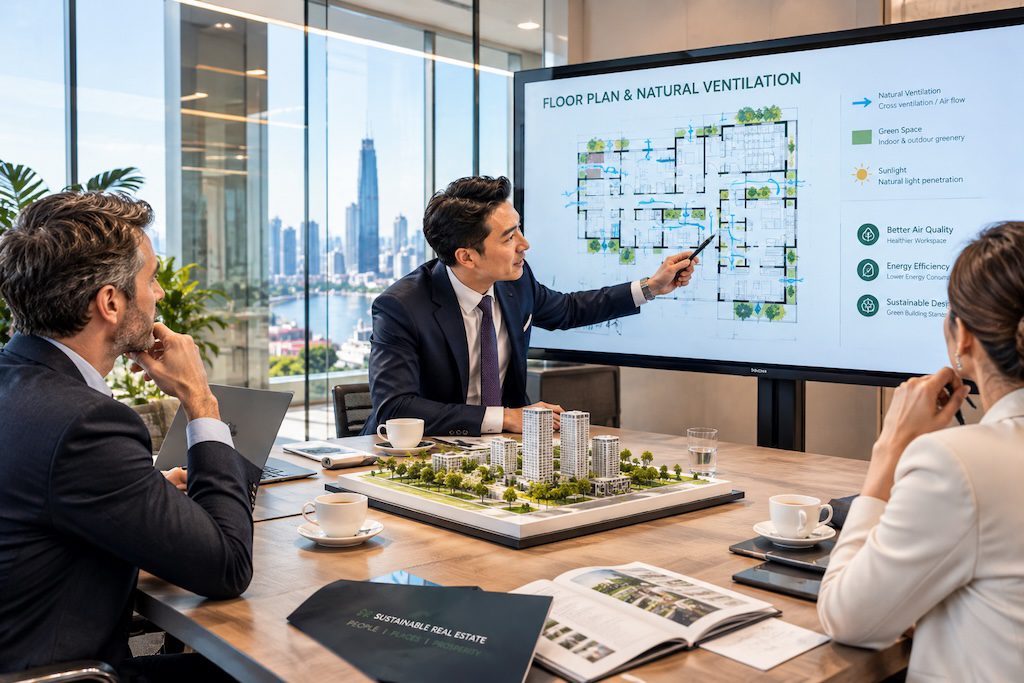
Consulting from experts helps businesses accurately assess infrastructure potential to achieve international LEED Lotus standards for their workspace.
Creating an ecological space: Roadmap to a green office ESG
The process of transforming and creating a green office ESG is a complex project, requiring close coordination between the Board of Directors, architectural design units, and real estate consulting experts. This roadmap cannot be rushed but must be meticulously planned through core phases.
First, the business must clearly define its Target Certification right from the site selection phase. Not every building has sufficient technical infrastructure (such as central Chiller systems, ceiling height, air convection capacity) to support the business in achieving LEED Lotus standards for Commercial Interiors. Therefore, the companionship of a technically knowledgeable brokerage unit is a prerequisite.
Next, the construction process must strictly comply with construction waste management regulations, prioritize the use of high-recycled-content materials, Formaldehyde-free water-based paints, and furniture with sustainable wood source certificates (FSC). Even the smallest changes during this phase can result in losing crucial points in the certification rating system.
Particularly, for Asian businesses, applying ecological designs must not conflict with traditional feng shui principles. The harmonious combination of natural light, air convection flows (Qi), and the arrangement of ecological greenery systems (Water and Wood) according to the commercial space feng shui handbook of N.N REALTY will create a working environment that both meets Western scientific LEED Lotus standards and converges the essence of Eastern philosophy, bringing sustainable prosperity to the organization.
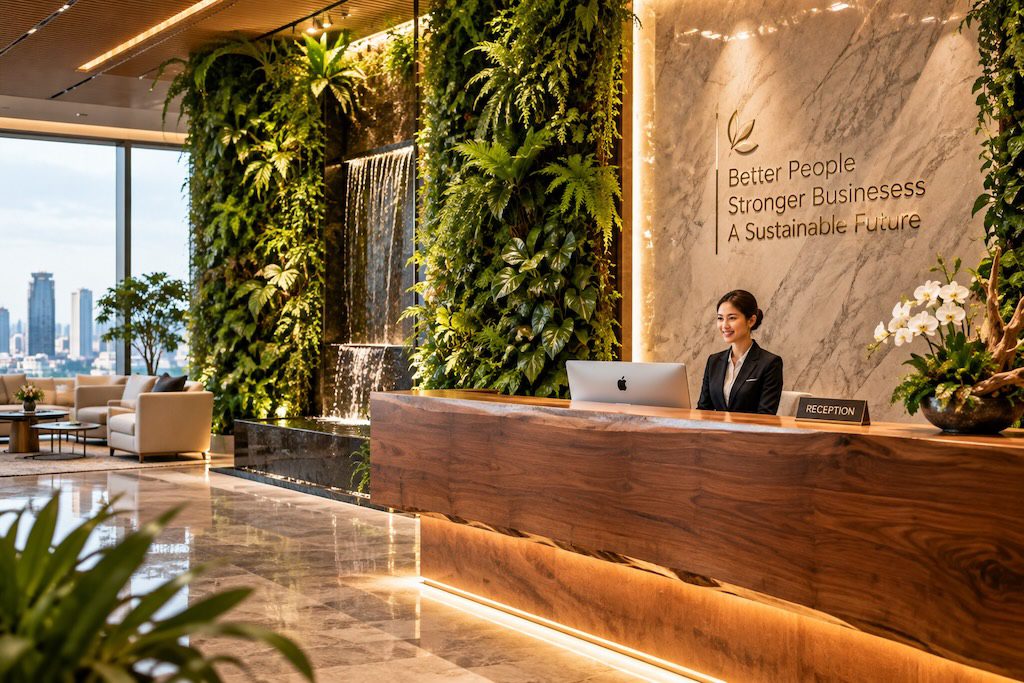
The harmonious combination between Western scientific principles and Asian feng shui creates a perfect ecological environment.
Frequently Asked Questions (FAQ) about the green office ESG
Below are the 6 most practical questions related to the green office ESG trend and the application of LEED Lotus standards that Chief Executive Officers frequently ask when working with the N.N GROUP ecosystem in HCMC:
1. If the building we are leasing does not meet ecological standards, can the business apply for a separate certificate for its own office?
Absolutely. International rating systems all have certification categories specifically for commercial interiors (e.g., LEED for Commercial Interiors). Businesses can apply LEED Lotus standards for their own space; however, it will be more difficult to achieve a high score if the building’s core infrastructure (like the central AC system) is too outdated.
2. What is the average time to complete the evaluation process and receive the certificate?
This process usually takes 6 to 12 months, starting right from the Concept Design phase until construction completion and actual operation. Registering and pursuing a green office ESG requires patience and an extremely transparent proof documentation system.
3. How much are the current consulting and certification fees for ecological standards in Vietnam?
This cost depends heavily on the floor area scale and the desired certification level. Typically, consulting fees and certification fees for LEED Lotus standards range from 15,000 USD to 40,000 USD. Note that this is only the procedural fee, excluding additional material and construction costs to meet the standards.
4. Are there any legal regulations forcing FDI enterprises to apply ecological standards when leasing premises?
As of now (2026), Vietnamese law does not have a mandatory regulation forcing every business to apply LEED Lotus standards. However, participating in the green office trend is voluntary but an “unwritten rule” if a business wants to join the global supply chains of large corporations.
5. What is Biophilic Design and what role does it play in the ecological space model?
Biophilic Design is a design philosophy that reconnects humans with nature. It is not just placing a few potted plants, but integrating natural light, wood materials, natural stone, the sound of flowing water, and organic shapes into the workspace. This is the key factor creating a perfect green office ESG, helping enhance focus and reduce stress for employees.
6. How can one quickly assess if a vacant premise has the potential to score high in the ecological rating system?
To quickly assess, you need to consider 3 factors: Location (near Metro stations, buses?), Building envelope (good heat radiation resistant glass?), and Ventilation system (capable of supplying natural fresh air?). It is best to use professional space consulting services from N.N REALTY for the most accurate assessments of the application potential for a green office ESG.
Conclusion: Elevating corporate status with the N.N GROUP ecosystem
The shift towards a green office ESG is not just a superficial architectural solution, but a solid testament to the strategic vision and excellent governance capacity of the corporate leadership. In an era where ESG criteria govern the flow of global investment capital, possessing a workspace that meets international LEED Lotus standards is the master key helping businesses build exclusive competitive advantages, attract talent, and optimize long-term financial efficiency.
The journey to actualize complex LEED Lotus standards requires the companionship of strategic partners with a deep understanding of local markets and international metrics. The comprehensive B2B ecosystem N.N GROUP proudly offers an “All-in-One” closed solution suite, helping businesses confidently conquer new heights:
- Initialize spatial advantages with N.N REALTY: By exploiting an exclusive data warehouse, our team of brokerage experts will represent the business to screen, evaluate, and negotiate lease contracts for Grade A+ premises possessing the most excellent ecological infrastructure foundations in HCMC. We ensure the location you choose is fully compatible and creates the most favorable momentum to achieve LEED Lotus standards with the most optimal costs.
- Protect legality and finance with N.N SERVICE: In parallel with the space creation process, our team of senior legal and accounting experts will support the business in reviewing legal barriers, establishing a transparent financial structure, and completing investment licensing procedures (IRC, ERC), ensuring the new headquarters setup process is fast, safe, and fully compliant with international standards.
Don’t let your business be left behind in the global sustainable development race. Let the N.N GROUP ecosystem become your strategic partner, creating a world-class ecological workspace and elevating your brand value today!