


The 2% Apartment Building Maintenance Fund: Residents’ Rights When Developers Delay Handover
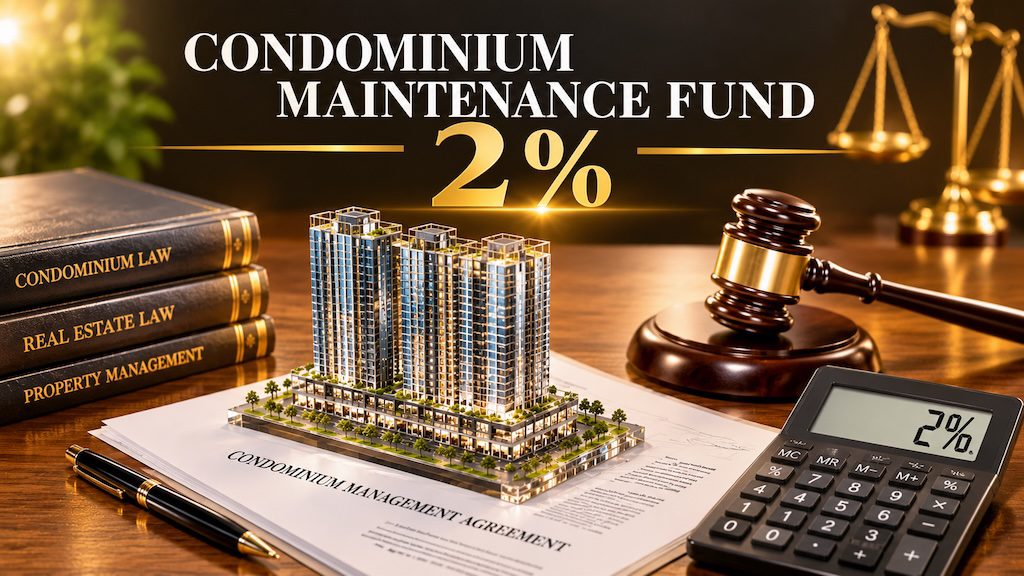
The urban real estate market picture in Vietnam is witnessing a dizzying increase in high-rise commercial housing projects. Accompanying this boom are fierce conflicts of interest between residents and project developers.
The hottest spot in these disputes that have lasted for many years is the 2% condo maintenance fund.
This is a massive financial sum, often reaching tens or even hundreds of billions of VND in mega-cities. The fact that the developer delays handover of this money is not only an administrative violation but also a skewed financial leverage, directly damaging the lifespan of the construction and the safety of thousands of human lives.
From a legal and macroeconomic perspective, the 2% condo maintenance fund absolutely does not belong to the project development enterprise. It is the common asset of the apartment owners collective, contributed from the time of signing the sale contract for the purpose of repairing and maintaining common ownership items when the building goes into operation.
However, the information asymmetry, the lack of consensus within the Management Board, along with loopholes in the previous enforcement stages have created opportunities for widespread capital misappropriation.
When the developer delays handover, the rights of residents are severely violated, leading to stagnation in maintaining the fire prevention and fighting (PCCC) system, elevators, and exterior structures.
This in-depth analysis provides an objective lens, dissecting the financial nature of this fund, analyzing the motives for misappropriation, and especially systematizing the latest legal corridors.
Through this, investors, Building Management Boards, and the property-owning community will master the rights of residents and the precise legal process to thoroughly recover the 2% condo maintenance fund when the developer delays handover.
Law and Economics analysis perspective: The core motivation causing the developer delays handover of the 2% condo maintenance fund lies in the Opportunity Cost of Capital. In a 1,000-unit high-end apartment project, the maintenance fund can reach the 100 billion VND mark.
If deposited in term savings, this amount generates billions of VND in profit every month. If injected into the enterprise’s operating cash flow, it solves the thirst for capital at zero cost.
Therefore, reclaiming the fund cannot merely rely on civil negotiation, but requires the use of administrative enforcement measures to freeze accounts according to the new provisions of the Housing Law.
Financial nature and ownership boundaries of the maintenance fund
According to current legal regulations, the 2% collection rate of the apartment value or retail area is calculated before Value Added Tax (VAT) and clearly stated in the sale/lease-purchase contract.
The nature of the 2% condo maintenance fund is a “mandatory savings” of the residents’ collective, paid to the developer to collect on their behalf during the phase when the project is not yet eligible to establish a Management Board.
The ownership boundary here is very clear: The developer only acts as an asset trustee for a certain period.
For the area retained by the developer and not sold (such as the podium commercial service area, commercial parking lot), the enterprise itself must also contribute an amount of 2% corresponding to the value of that area into the common account.
This transparency aims to ensure fairness in maintaining shared technical items such as water pump systems, backup generators, security cameras, and ventilation systems.
However, ambiguity often occurs at the handover stage. By law, the 2% condo maintenance fund must be deposited into a payment deposit account opened at a credit institution operating in Vietnam.
This account must be clearly named as a maintenance funding deposit. When the developer fails to properly establish a specialized collection account, this cash flow easily blends into the enterprise’s working capital, leading to the consequence of insolvency when the handover deadline arrives.
The 2% apartment building maintenance fund is a mandatory contribution collectively owned by the residents. The developer acts solely as a collection agent and is required to deposit the funds into a separate payment deposit account.
Economic consequences and asset value depreciation
When the developer delays handover of the 2% condo maintenance fund, the rights of residents to live in a safe environment are deprived. The consequences do not just stop at arguments in the press but constitute measurable economic damages to the real estate value.
First, the degradation of MEP (mechanical, electrical, plumbing) infrastructure. Elevators and fire safety systems are items requiring periodic maintenance at huge costs. Without the capital reserve, the Management Board cannot sign maintenance contracts with genuine contractors.
The malfunction of the fire alarm system or a free-falling elevator not only threatens lives but also seriously violates operating standards. Commercial assets located in these buildings will be immediately rejected by tenants, disrupting the passive cash flow of B2B investors.
Second, declining liquidity and depreciating asset prices. A project entangled in protest banners demanding the maintenance fund will be undervalued by the secondary market.
Savvy homebuyers and valuation experts frequently consult real estate project data from N.N REALTY to filter out buildings with a history of weak governance.
Customers are willing to pay higher prices for urban areas with transparently operating Management Boards, holding the maintenance fund, and maintaining standard building landscapes.
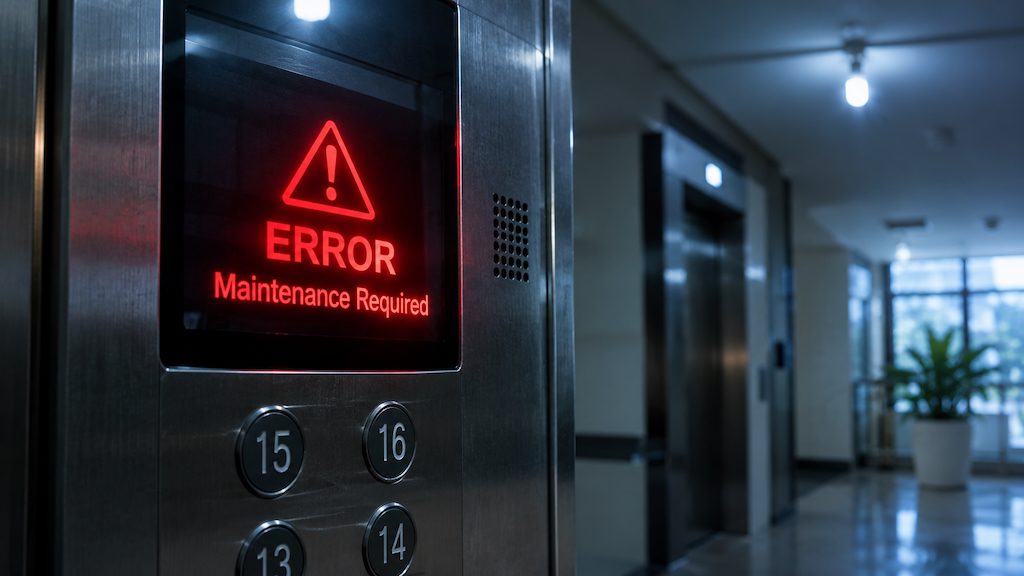
The shortfall of the maintenance fund leads to severe degradation of elevator and fire safety systems, reducing the building’s liquidity.
The Psychological Impact on Residential Communities
Beyond the tangible financial and structural damages, the prolonged battle over the maintenance fund inflicts a profound psychological toll on the residential community. An apartment building is not just an asset; it is a home.
When a developer delays handover of the funds necessary for upkeep, it breeds a pervasive atmosphere of mistrust and anxiety among neighbors. Residents feel cheated, realizing that the ‘luxury’ lifestyle they purchased is compromised by administrative malfeasance.
The constant friction between a newly formed Management Board and a recalcitrant developer often spills over into community forums and social media, creating a toxic living environment.
This social fracture destroys the intangible community value, making the building an undesirable place to live and further accelerating its devaluation on the secondary market. A harmonious community requires financial transparency; without it, the very fabric of the neighborhood unravels.
Legal corridor protecting residents’ rights
To prevent capital misappropriation, the legal system (especially the 2023 Housing Law and guiding Decrees for implementation) has granted powerful legal tools to protect the rights of residents.
The timing for handing over the capital reserve is clearly defined: Within 07 days from the date the Condominium Management Board is established and issues a written request, the developer must transfer the entire fund (including both principal and deposit interest).
The law does not allow the developer to offer reasons such as “not yet finalized the common – private area” or “not yet agreed on figures” to delay the handover.
If there is a dispute over figures, the developer must still hand over first the funding collected from buyers; the remainder (the portion the developer must pay or the difference) will continue to be resolved later. This is the principle of “residents’ money must be returned to residents” to ensure the building is not paralyzed in operation.
In case the developer delays handover, the rights of residents are activated through a mechanism requesting government intervention. The Provincial/Centrally-run City People’s Committee (UBND) has the highest authority in issuing enforcement decisions to recover the capital reserve, requiring credit institutions to freeze and automatically deduct money from the enterprise’s account to transfer to the Management Board’s account.
The Role of Transparency and Independent Audits
To combat the systemic issue of developers misappropriating funds, the market is increasingly demanding radical transparency and mandatory independent audits. It is no longer sufficient for a developer to merely provide a self-generated spreadsheet of expenses upon handover.
Savvy Management Boards are now insisting on comprehensive, forensic audits conducted by reputable third-party accounting firms. These audits meticulously trace every single transaction from the specialized collection account, ensuring that the 2% condo maintenance fund was not illicitly used to cover the developer’s marketing expenses, operational overhead, or construction debts on other projects.
Furthermore, the push for transparency extends to the ongoing management of the fund once it is successfully recovered. Modern Management Boards are adopting digital platforms to provide residents with real-time visibility into the fund’s balance and expenditure.
By publishing digital ledgers and maintenance schedules, the Board builds trust and prevents future internal disputes. This level of financial hygiene is becoming a critical benchmark for high-end developments, separating properties that will maintain their value from those destined to become decaying concrete liabilities.
Enforcement process when the developer delays handover of the maintenance fund
Chanting slogans will yield no results if the Management Board does not master the administrative litigation process. Below is the precise legal roadmap to reclaim the capital reserve when the developer delays handover, helping to protect the rights of residents thoroughly:
| Legal Execution Steps | Actions of the Management Board (BQT) & Residents | Responsibilities of the State Management Agency |
|---|---|---|
| Step 1: Direct Request and Minutes Creation | BQT sends an official document requesting the developer to hand over the capital reserve after 07 days of having the decision recognizing the BQT. Create minutes recording the act where the developer delays handover. | Ward/Commune People’s Committee witnesses and records the incident minutes if conflicts occur at the project. |
| Step 2: Request administrative enforcement | BQT drafts a dossier, attaching evidence, and sends it to the District People’s Committee and the Department of Construction requesting intervention to protect the rights of residents. | The Department of Construction inspects, audits, and advises the Provincial People’s Committee to issue an Enforcement Decision to recover the capital reserve. |
| Step 3: Account freezing and extraction | Provide the BQT’s account number according to the operating regulations approved by the Condominium Conference to receive the enforced money. | The credit institution (Bank) executes the order of the Provincial People’s Committee, immediately freezes the developer’s account, and extracts money to transfer to the BQT. |
| Step 4: Asset enforcement & Criminal prosecution | Authorize a professional legal organization to represent the BQT to file a civil lawsuit or denounce the crime of Abuse of trust to appropriate property. | The judgment execution agency distrains the enterprise’s assets. The Police Investigation Agency steps in if there are signs of asset dispersion. |
Although the above process has been legislated, actual implementation requires patience and strict evidence-gathering skills. Newly established Management Boards often lack experience in drafting legal documents and working with the Department of Construction.
This is when the companionship of the real estate legal consulting team from N.N SERVICE becomes the deciding factor, helping to shorten complaint times and ensuring documents sent to authorities achieve absolute accuracy.
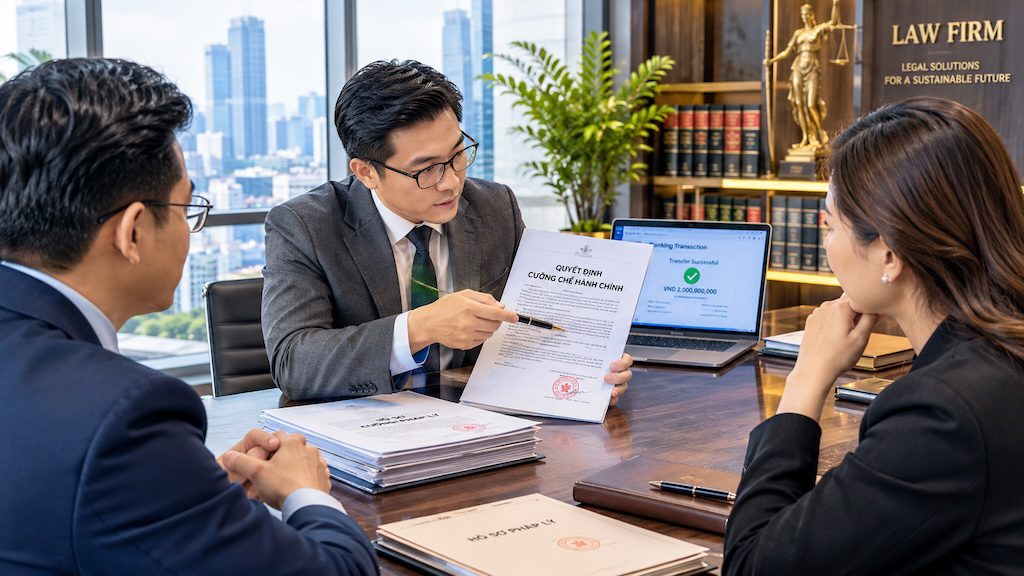
The Management Board needs the support of legal experts to prepare enforcement dossiers for submission to the Department of Construction and the Provincial People’s Committee.
Risk prevention solutions from the contract signing stage
To avoid putting oneself in a passive position when the developer delays handover of the capital reserve, the rights of residents must be solidly established right from the moment of signing the Sale Contract. Secondary investors and homebuyers need to equip themselves with sharp civil defense skills.
First, carefully check the clause regarding the receiving account number. The developer is obliged to clearly state in the sale contract an independent bank account exclusively used for collecting the capital reserve.
Buyers must absolutely not transfer this money into the enterprise’s transaction payment account for the house purchase. Transferring correctly into the specialized collection account will help authorities easily freeze it when an incident occurs.
Second, actively participate in the first Condominium Conference. The participation of intellectual owners and B2B investors knowledgeable in governance in the Building Management Board is the biggest barrier against developers with intentions to misappropriate.
A strong Management Board, with expertise in MEP engineering and law, will quickly test and accept the system, demand transparent area data, and finalize the capital reserve books without giving the opposing side a chance to drag out the time.
Finally, for mixed-use buildings with large podium commercial areas, the delineation of common maintenance costs and private maintenance costs (office areas, commercial centers of the developer) must be clarified in the management regulations.
Re-measuring the area to accurately calculate the amount the developer must additionally contribute to the fund requires the participation of independent measurement and valuation units.
Objectivity from third-party partners will protect the rights of residents from reported figures that favor the project developer.
Frequently Asked Questions (FAQ) about the condo maintenance fund
Below are the 6 most highly practical issues that resident communities, Management Board members, and investors frequently raise when facing a situation where the developer delays handover of the capital reserve:
1. What value of the apartment is the 2% condo maintenance fund based on?
2. If the Management Board has not yet been elected, who manages the 2% condo maintenance fund?
3. What are the rights of residents when discovering the developer is misusing the maintenance fund?
4. If the developer delays handover of the fund because the common/private areas are not yet agreed upon, what should residents do?
5. Who does the interest generated from the maintenance fund in the bank account belong to?
6. Can the 2% condo maintenance fund be used to hire a monthly operation management unit?
Conclusion
The legal battle surrounding the 2% condo maintenance fund is a clear testament to the transformation of the Vietnamese real estate market: from a period of hot development to a period of standardization and the rule of law.
The fact that the developer delays handover of this money not only erodes the building’s value but also directly challenges the rights of residents.
Thoroughly understanding the legal nature, the enforcement process, and the art of negotiation will help the Management Board regain control of the common asset block, ensuring safety and increasing sustainable value for living and business spaces.
For residential communities, institutional investors, and Building Management Boards, tackling complex administrative documents and prolonged litigation processes alone is a major challenge. To establish a solid legal corridor and optimize asset management, the N.N GROUP ecosystem provides a comprehensive companion solution suite:
- Through the practical battle experience of N.N REALTY, we support investors in appraising operation management quality, valuing secondary real estate, and filtering projects with high financial transparency before pouring investment money.
- Accompanying N.N SERVICE, the legal expert team will directly advise, draft enforcement dossiers, represent the Management Board working with state administrative agencies to thoroughly recover the maintenance funding, absolutely protecting the legitimate interests of the residents’ collective.
Don’t let the common asset block be misappropriated, degrading your investment value. Let the N.N GROUP ecosystem become a legal fulcrum, accompanying the Management Board to create a safe, transparent, and prosperous living space today!Connect with Real Estate Legal and Governance Consulting