

Who is BIM Group? A Journey of Over 30 Years in Multi Industry Development
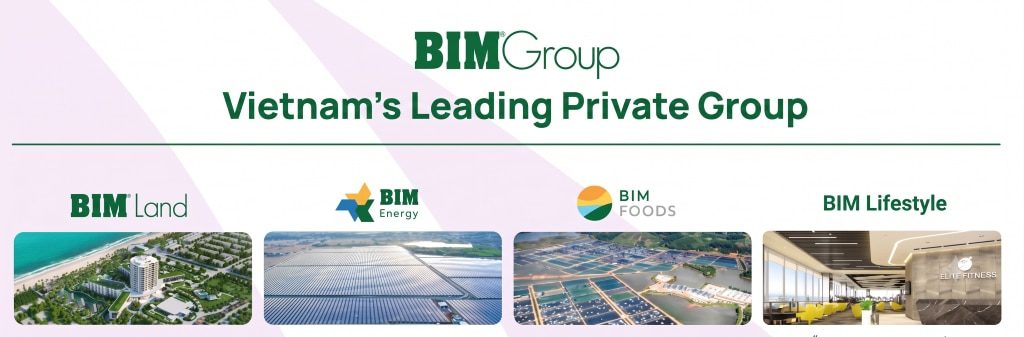
BIM Group is a multi-sector economic conglomerate in Vietnam, founded in 1994 by entrepreneur Doan Quoc Viet. Over more than three decades of development, BIM Group has built an ecosystem operating in four core sectors including Real Estate, Agriculture & Food, Renewable Energy, and Consumer Services.
From its first projects in Quang Ninh, BIM Group has gradually expanded its presence to many localities in Vietnam and the Lao market. A notable point in the group’s development model is the trend of long-term investment, combining multiple business fields to effectively exploit the strengths of each locality.
Overview of BIM Group
BIM Group defines its vision to become a pioneering multi-sector economic conglomerate, aiming for creative, quality, and sustainable investments in Vietnam and neighboring countries. The four core values announced by the enterprise include Knowledge – Creativity – Efficiency – Integrity.
History of BIM Group
The journey of BIM Group is closely tied to founder Doan Quoc Viet.
Before returning to Vietnam, Mr. Doan Quoc Viet studied in Poland and started his business in the import-export sector in 1989. In 1990, he founded BIM Co. Ltd in Poland, operating in trade, hotels, and restaurants. By 1994, he returned to Vietnam and established BIM Group.
In the early years, Quang Ninh was one of the group’s crucial areas. Halong Plaza Hotel commenced operations in 1997, followed by aquaculture activities and infrastructure development in Ha Long.
From this foundation, BIM Group gradually expanded into agriculture, salt production, real estate, consumer services, and later renewable energy.
Notable milestones in the development journey
1994 – 2003: BIM Group was established; Halong Plaza began operations in 1997; Minh Thanh shrimp farming area has been active since 2001; in 2003 the enterprise inaugurated the Hung Thang coastal road in Ha Long.
2004 – 2009: The Group continued to expand the seafood sector, putting the Seed Investment and Development Center in Phu Quoc into operation; developed Fraser Suites and Syrena in Hanoi; and expanded into salt production in Ninh Thuan.
2010 – 2017: Elite Fitness was born in 2010. BIM Group simultaneously expanded its real estate and hospitality operations and began collaborating with international management brands. In 2015, the group signed with IHG to develop projects in Phu Quoc and Vientiane.
2018 – 2021: This is a notable transition period. In 2018, BIM Group restructured and established two brands, BIM Land and BIM Energy. The solar power plant cluster in Ninh Thuan was inaugurated in 2019; by September 2021, the 88 MW BIM Wind Power Plant went into commercial operation.
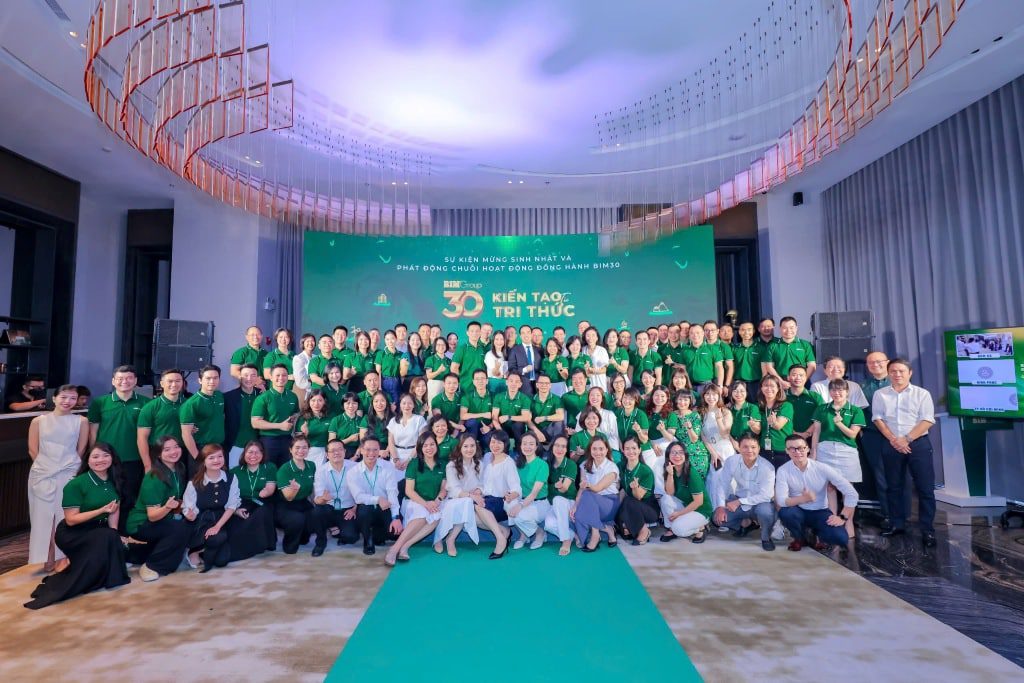
From 2024: BIM Group celebrates its 30th anniversary. After founder Doan Quoc Viet passed away in November 2024, Mr. Doan Quoc Huy officially assumed the position of Chairman of the Board and General Director from November 25, 2024.
Entering a new phase, the group continues to expand investments and partnerships. In 2026, BIM Group signed a comprehensive cooperation agreement with Vietcombank; expanded partnerships with Central Retail and AEONMALL Vietnam; and perfected the Royal Square Vientiane ecosystem in Laos.

Founder of BIM Group – Entrepreneur Doan Quoc Viet
Mr. Doan Quoc Viet (1955–2024) is the founder and layer of the foundation for BIM Group’s development.
He graduated from the Faculty of Mechanical Engineering, Hanoi University of Science and Technology, and worked at the Electrical Engineering Research Institute under the Ministry of Electricity before going to Poland for research. His technical background, combined with European business experience, later significantly influenced BIM Group’s long-term investment mindset in sectors such as agriculture, energy, and real estate.
From an enterprise established in 1994, under Mr. Doan Quoc Viet’s era, BIM Group developed into a multi-sector ecosystem with operations spreading from Quang Ninh, Hanoi, Ninh Thuan, Phu Quoc to Laos.
Mr. Doan Quoc Viet passed away on November 7, 2024, at the age of 70.
Who is the current Chairman of BIM Group?
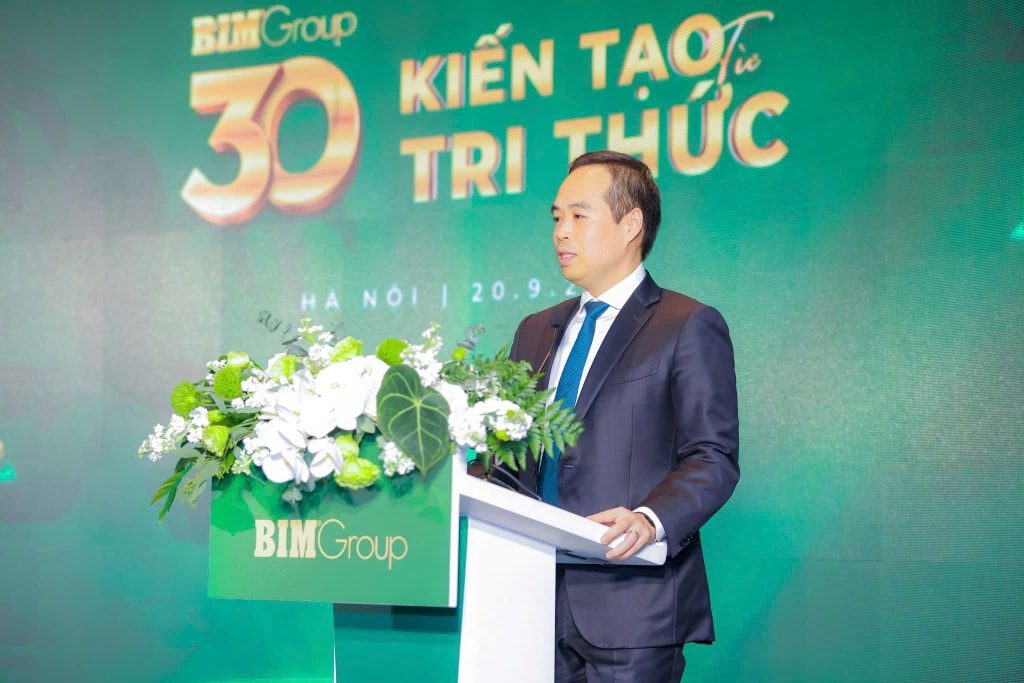
The current Chairman of the Board of Directors and General Director of BIM Group is Mr. Doan Quoc Huy, born in 1984.
Mr. Doan Quoc Huy holds an MBA from Stanford University and has an educational background in Construction Management and Entrepreneurship from the University of Southern California (USC). Before taking the top position at the group, he had nearly 20 years working at BIM Group and participating in the management of its core business sectors.
From November 25, 2024, Mr. Doan Quoc Huy officially assumed both roles as Chairman and General Director of BIM Group.
This also marks the generational leadership transition at BIM Group after its first three decades under the guidance of founder Doan Quoc Viet.
4 core business sectors of BIM Group
An important distinction when learning about BIM Group is that it is not just a real estate enterprise.
BIM Group currently identifies four core business sectors including Real Estate, Agriculture & Food, Renewable Energy, and Consumer Services.
1. Real Estate – BIM Land
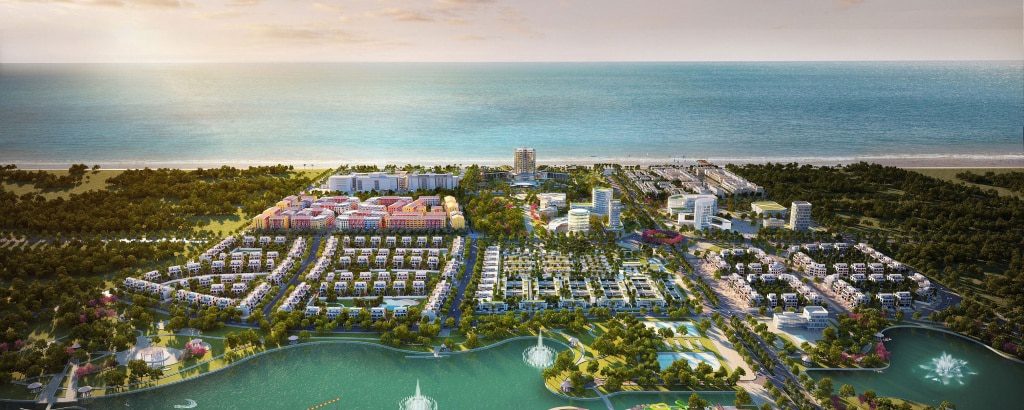
In the real estate sector, BIM Group develops through the BIM Land brand.
According to information currently published by the group, the real estate segment has a land fund of over 9 million m² and focuses on developing urban areas, resort real estate, and various other product types.
BIM Land is present in markets such as Ha Long, Phu Quoc, Hanoi, Long An, and some other localities, while also cooperating with many international brands in the hospitality sector.
See details: BIM Land – Developer overview and outstanding projects.
2. Renewable Energy – BIM Energy
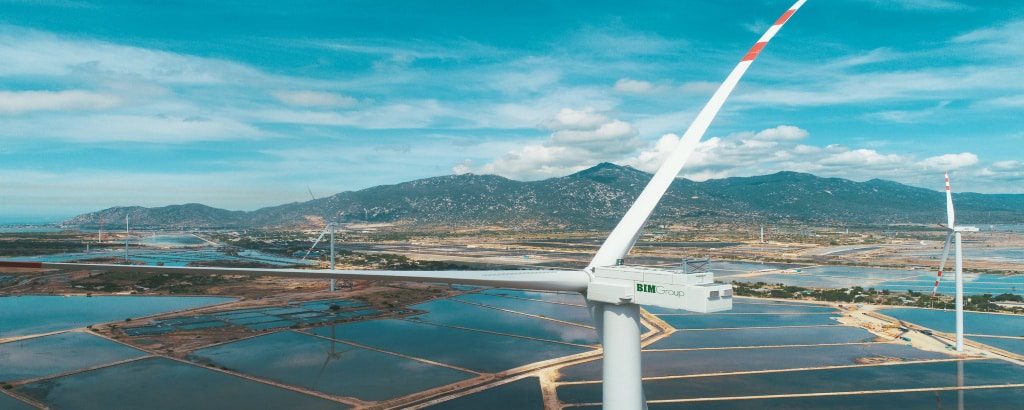
BIM Energy is the brand representing the group’s renewable energy sector.
One of its outstanding marks is the Green Economic Complex in Ninh Thuan, where BIM Group combines salt production with solar and wind power systems in the same area, thereby optimizing land resource utilization.
The BIM solar power cluster reaches a capacity of 405 MWp, while the BIM Wind Power Plant has a capacity of 88 MW. According to the group’s updated information, BIM Energy currently operates over 500 MW of solar and wind power, producing nearly 1 billion kWh of electricity per year, equivalent to the consumption needs of about 300,000 households.
This is one of the clearest examples of how different sectors in the BIM Group ecosystem can interconnect.

3. Agriculture and Food – BIM Foods
BIM Foods is the brand representing the Agriculture and Food segment.
According to BIM Group, this ecosystem currently has nearly 5,000 hectares of farming and production area, ranging from salt production to seafood farming and processing.
In Ninh Thuan, BIM Foods has invested in a salt industrial economic zone of over 2,200 hectares, capable of producing about 350,000 tons of salt per year. In the seafood sector, the enterprise announced about 1,600 hectares of shrimp farming area in many localities and developed a chain from seed to farming and processing.
BIM Foods is also the unit that introduced the Pacific oyster breed for development in Vietnam and built a large-scale farming area in Van Don, Quang Ninh.
4. Consumer Services
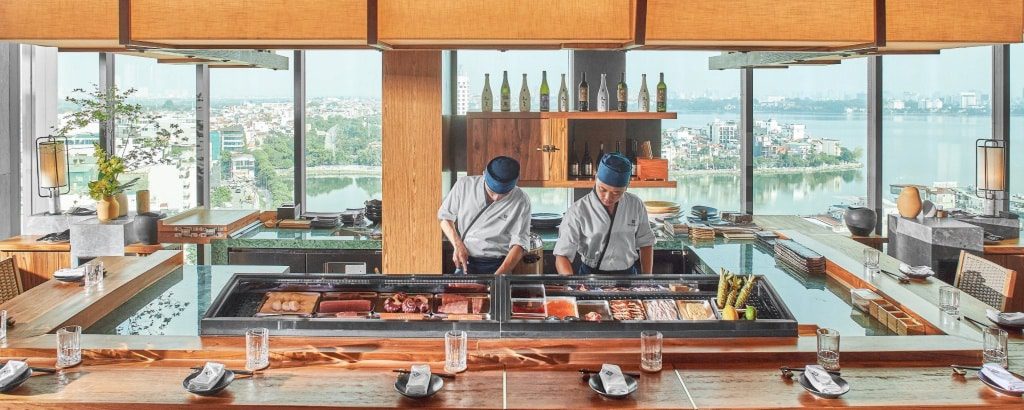
The fourth pillar of BIM Group is Consumer Services, focusing on sports, health, and F&B.
One of the most recognizable brands is Elite Fitness, established in 2010. The BIM Group website currently records the system has 14 clubs nationwide.
Besides Elite Fitness, BIM Group’s service ecosystem also includes F&B and restaurant operations at hotel, resort projects, as well as commercial venues developed by the group.
What is notable about BIM Group’s multi-sector ecosystem model?
A notable point in BIM Group’s development process is that its business segments do not operate completely separately.
The clearest example is at the salt production area in Ninh Thuan. On a land area of about 2,500 hectares, BIM Group simultaneously develops salt production, solar power, and wind power, forming a green economic complex model.
In real estate, a similar strategy is reflected by combining housing, hotels, resorts, commerce, services, and amenities at the destinations the group invests in.
This approach partly explains why BIM Group develops multiple sectors simultaneously yet maintains connections between industries: exploiting local strengths, complementing economic components, and building an ecosystem capable of long-term operation.
Vision and developmental values of BIM Group
BIM Group announced its vision to become a pioneering multi-sector economic conglomerate, aiming for creative, quality, and sustainable investments in Vietnam and neighboring countries.
The group’s mission is built on the foundation of “Knowledge and Wisdom”, aiming to develop economic complexes, constructions, and products according to high standards, while paying attention to the impact on the living environment and community.
The four core values identified by BIM Group include: Knowledge – Creativity – Efficiency – Integrity.
This is also the foundation for the group’s current brand message: “Where knowledge becomes value”.
BIM Group enters a new stage of development
The 30-year milestone in 2024 simultaneously marks the transition to a new phase for BIM Group.
After Mr. Doan Quoc Huy took over the position of Chairman of the Board and General Director, the group continued to boost operations in its four core sectors and expand relationships with major partners.
In 2026, BIM Group signed a comprehensive cooperation agreement with Vietcombank; signed a partnership with Central Retail Vietnam in the retail sector at urban projects; and collaborated with AEONMALL Vietnam to develop the AEON MALL Da Nang Hoa Xuan project.
These moves show that BIM Group’s development direction continues to revolve around a multi-sector ecosystem model, in which real estate, commercial – services, energy, and production sectors can complement each other.
Frequently Asked Questions about BIM Group
Conclusion
From an enterprise established in 1994, BIM Group has developed into a multi-sector conglomerate with an ecosystem encompassing real estate, agriculture – food, renewable energy, and consumer services.
The group’s over three decades of development is attached to many localities such as Quang Ninh, Hanoi, Ninh Thuan, Phu Quoc, and Vientiane, demonstrating an investment model that tends to link business operations with the unique strengths of each land.
Among them, BIM Land is the pillar in charge of the real estate sector and is also the brand most interested in by the real estate market. N.N GROUP will analyze separately the history, scale, development capacity, and project portfolio of BIM Land in an upcoming in-depth article.